



What's Happening?
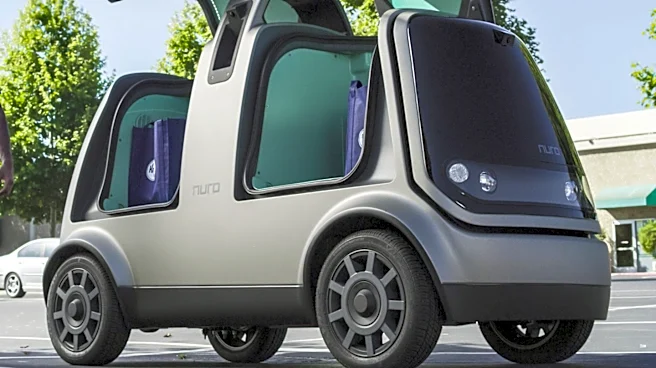
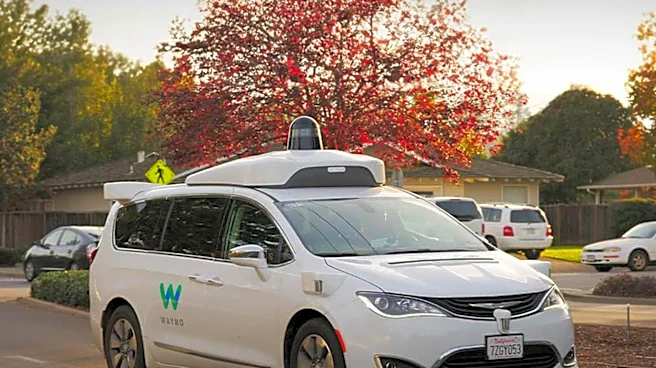
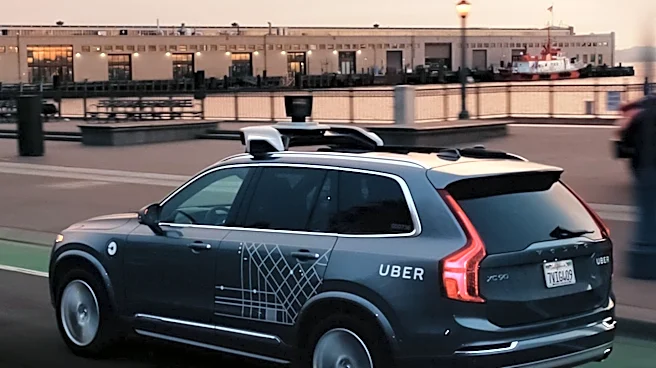
Lucid Gravity robotaxis, developed through a collaboration between Lucid, Uber, and Nuro, have commenced driverless testing on public roads. These modified Gravity SUVs are equipped with an Uber-designed cabin interface and utilize Nuro’s autonomous driving
system. The vehicles integrate high-resolution cameras, lidar sensors, and radar sensors, along with a rooftop 'halo' for identification via LED lights. Testing initially began with human supervision in the San Francisco Bay Area in December 2025 and has since expanded to Houston, with continuous round-the-clock supervised testing. The current phase involves operating on public roads without a safety operator inside. The California Department of Motor Vehicles has granted permits for these driverless tests and for passenger rides when a safety driver is present. Lucid has supplied over 100 autonomous vehicles for this testing phase.
Why It's Important?
This development signifies a major step forward in the commercialization of autonomous ride-hailing services in the U.S. The collaboration between a vehicle manufacturer (Lucid), a ride-sharing giant (Uber), and an autonomous technology developer (Nuro) could accelerate the deployment of self-driving cars. For Uber, this initiative aims to reduce operational costs associated with human drivers, potentially increasing profitability and service efficiency. For Nuro, it provides a significant platform to validate and scale its autonomous driving technology in real-world urban environments. The San Francisco Bay Area's role as a testing ground highlights its importance in the evolution of robotaxi technology, with implications for urban transportation infrastructure and regulatory frameworks nationwide. The success of these tests could influence public perception and acceptance of autonomous vehicles, paving the way for broader adoption.
What's Next?
The Lucid Gravity robotaxis are expected to begin offering rides through the Uber app in the Bay Area during the first quarter of 2027. Following this initial launch, Uber plans to expand the service to dozens of global markets over the subsequent years. As part of the collaboration, Uber has committed to owning and operating at least 35,000 Lucid vehicles equipped with Nuro’s autonomous technology. The ongoing driverless testing will be crucial for refining the autonomous system's performance and ensuring safety before public deployment. Regulatory bodies, particularly the California Department of Motor Vehicles, will continue to monitor these operations, and their findings could influence future permitting and operational guidelines for autonomous vehicles across the country.
Beyond the Headlines
The introduction of driverless robotaxis raises complex ethical and societal questions. The removal of human safety operators shifts the responsibility for on-road incidents entirely to the autonomous system and its developers, potentially leading to new legal precedents and insurance models. The widespread adoption of such services could also have significant impacts on employment in the transportation sector, particularly for ride-share drivers. Furthermore, the data collected by these vehicles, including passenger movements and urban patterns, presents privacy considerations. The 'halo' identification system, while practical, also highlights the need for clear communication and trust-building between autonomous vehicles and the public. The success of this venture could set a benchmark for how autonomous technology is integrated into daily life, influencing urban planning, public policy, and consumer behavior.