





What's Happening?
Nvidia CEO Jensen Huang has emphasized the significant energy requirements for artificial intelligence (AI) development, suggesting that AI computing will need approximately 1,000 times more energy than is currently available. Speaking at a Stanford University
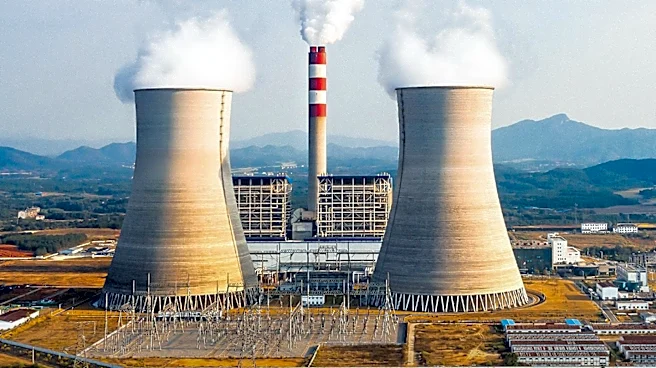
class, Huang described AI as an 'industrial transformation' that will fundamentally change how energy is produced and consumed, as well as how factories are built and economies grow. U.S. Secretary of Energy Chris Wright echoed these sentiments, highlighting the Department of Energy's focus on ensuring the energy system can support AI's growth. The U.S. is projected to need over 230 gigawatts of new generating capacity by 2031, but current plans only account for 93 gigawatts, indicating a significant power gap.
Why It's Important?
The statements by Huang and Wright underscore the critical intersection of AI development and energy infrastructure. As AI becomes integral to various industries, the demand for energy will increase, potentially straining existing power grids. This situation presents both challenges and opportunities for the energy sector, which must innovate to meet these demands. The potential power gap could hinder AI advancements, affecting industries reliant on AI for growth and efficiency. This scenario also highlights the need for strategic investments in energy infrastructure to support technological advancements and maintain economic competitiveness.
What's Next?
The U.S. energy sector faces the challenge of expanding its capacity to meet the projected demand for AI-related power. This will likely involve significant investments in renewable energy sources and grid modernization. Policymakers and industry leaders may need to collaborate on strategies to accelerate energy infrastructure development. Additionally, the semiconductor supply chain, crucial for AI data centers, may require enhancements to prevent bottlenecks. The ongoing dialogue between technology leaders and energy policymakers will be crucial in shaping the future landscape of AI and energy.