

What's Happening?
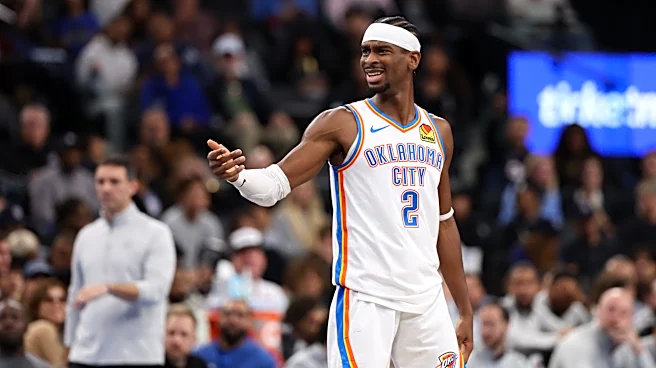
Second-year guard Nique Clifford has taken personal responsibility for his recent trade from the Sacramento Kings to the Oklahoma City Thunder. The Kings traded Clifford, a 24-year-old drafted in the first round just over a year ago, for a pair of second-round
picks. Clifford, who made his return to Sacramento playing for the Thunder, stated, “I got to be better. I didn’t play well enough. I fell out of the rotation, and part of that is definitely on me.” He averaged only 6.3 minutes in eight games for the Kings this season, a significant drop from his rookie year where he averaged 8.6 points, 3.8 rebounds, and 2.4 assists in 25.1 minutes per game. Despite his accountability, the trade came as a shock to many fans who viewed him as a vital piece of the Kings' young core.
Why It's Important?
Nique Clifford's trade and his subsequent public statement highlight the intense pressure and accountability placed on individual players in professional sports. While Clifford took the blame, the decision to trade a recent first-round pick so quickly also raises questions about the Sacramento Kings' management and their player development strategy. This move, coupled with the Kings' current historic losing streak, suggests potential instability within the organization and a struggle to identify and nurture talent. For Clifford, the trade offers a new opportunity in Oklahoma City, a team he described as a 'great situation,' potentially allowing him to fulfill his potential in a different environment. For the Kings, the trade of a young player for future draft picks indicates a potential shift towards rebuilding or a re-evaluation of their roster construction.
What's Next?
Nique Clifford will continue his career with the Oklahoma City Thunder, where he hopes to find more playing time and contribute to a championship organization. His performance with the Thunder will be closely watched, as it will serve as a benchmark for both his individual growth and the Kings' decision to trade him. For the Sacramento Kings, the trade of Clifford is part of a broader narrative of a struggling team. The organization will need to address its ongoing issues with consistency, player development, and roster management. Future moves by the Kings' management will likely be scrutinized in light of their current performance and past decisions regarding young talent. The team's ability to learn from this and other personnel decisions will be crucial for its long-term success.
Beyond the Headlines
Clifford's willingness to take the fall for his trade, despite the Kings' organizational issues, speaks to the culture of personal responsibility often expected from athletes. However, it also subtly deflects attention from the broader systemic problems within the Kings' management, such as a 'logjam in their backcourt' and a perceived trend of giving up on young talent too easily. This situation can have a ripple effect on other young players within the organization, potentially impacting their confidence and trust in management. The trade also underscores the business aspect of professional sports, where personal connections and potential are often secondary to immediate team needs and strategic decisions, even if those decisions are questioned by fans and analysts. The narrative of 'unfinished business' for Clifford highlights the emotional toll such moves can take on players.