









What's Happening?
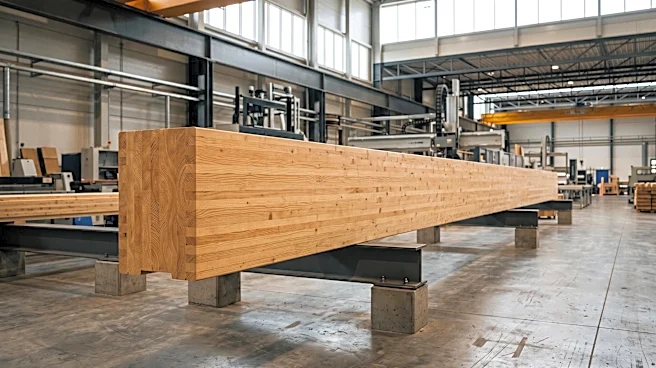
A bipartisan bill, the Mass Timber Growth and Innovation Act, has been introduced by Oregon Democrat Andrea Salinas and Pennsylvania Republican Glenn "GT" Thompson. This legislation aims to incentivize the growth of mass timber factories in the United
States by allowing them to claim a 10 percent tax credit on investments in new machinery, equipment, and buildings. This credit is modeled after a similar provision for semiconductor plants, which offers a 35 percent credit. The bill identifies five qualifying mass timber products, with provisions for the U.S. Treasury to add more after consulting the USDA. Additionally, research into mass timber would receive a separate 20 percent credit, and qualifying factories would have an extended five-year window to begin construction after the current credit period ends.
Why It's Important?
This initiative is crucial for addressing the U.S. housing crisis and promoting sustainable construction practices. By encouraging domestic mass timber production, the bill seeks to lower housing costs by making building materials more affordable and construction processes faster. Mass timber, known for its efficiency and environmental benefits, offers a sustainable alternative to traditional construction materials. The legislation could stimulate job creation in manufacturing and forestry sectors, reduce reliance on imported timber, and contribute to carbon sequestration efforts. Organizations like the Chamber of Progress, the American Wood Council, and Weyerhaeuser are backing the bill, highlighting its potential to transform the construction industry and support economic growth in the U.S.
What's Next?
The Mass Timber Growth and Innovation Act has been referred to the House Ways and Means Committee for consideration. Its passage would significantly alter the landscape of the U.S. construction industry, potentially leading to a surge in mass timber factory development and increased adoption of mass timber in building projects. The bill's success could also pave the way for further legislative support for sustainable building materials and practices. Stakeholders, including developers, environmental groups, and the timber industry, will be closely watching its progress, as it could influence future investment decisions and the trajectory of sustainable development in the country. The effectiveness of the 10 percent tax credit in attracting sufficient investment will be a key factor in its long-term impact.
Beyond the Headlines
The push for mass timber production extends beyond economic and environmental benefits, touching upon broader issues of innovation and resilience in the U.S. manufacturing sector. By leveraging tax credits to foster a nascent industry, the government is signaling a commitment to diversifying its industrial base and embracing advanced manufacturing techniques. This move could also enhance national security by reducing dependence on foreign supply chains for critical building materials. Furthermore, the emphasis on research and development within the bill highlights a strategic vision for continuous improvement and technological advancement in sustainable construction. The success of this act could serve as a model for how targeted government incentives can drive innovation and address complex societal challenges like housing affordability and climate change simultaneously.