





What's Happening?
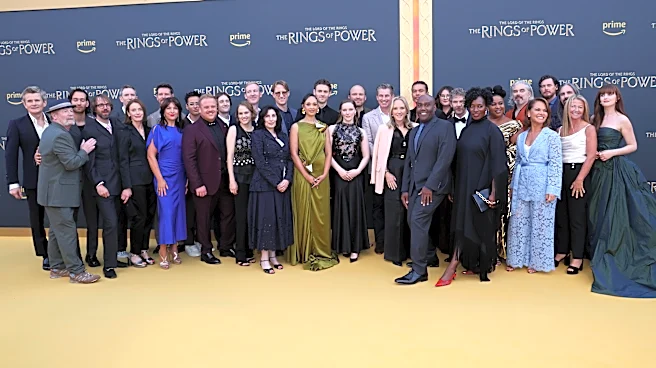
The third season of 'The Lord of the Rings: The Rings of Power,' premiering on November 11, will depict a civil war in Numenor while Sauron expands his dominion across Middle-earth. Sauron has conquered most regions, leaving only Khazad-dûm, Lindon, and Rivendell
as remaining strongholds. The Elves are in a desperate race to prevent the creation of the One Ring, which would control the three Elven rings, while a faction of Dwarves resists Khazad-dûm from aligning with Sauron. In Numenor, the conflict is between Pharazôn's Kingsmen and Queen Míriel's Faithful. Executive producer J.D. Payne stated that the first two seasons were about 'lighting a bunch of fuses,' and now 'the bombs start to go off.' The season will delve into the political drama within Numenor, with Lloyd Owen, who plays Elendil, comparing the storyline to the fall of the Roman Empire and Shakespeare's 'Julius Caesar.' The series will explore the deepening rivalry between Pharazôn and Sauron, as well as the internal struggles of characters like Isildur, who becomes more rogue, and Eärien, whose loyalties are conflicted.
Why It's Important?
The unfolding civil war in Numenor is critical as it distracts the island nation from the growing external threat posed by Sauron. This internal strife could weaken Numenor's ability to resist Sauron's forces, potentially altering the balance of power in Middle-earth. The series explores themes of political division, ambition, and the struggle for power, which resonate with broader societal and historical contexts. The conflict between the Kingsmen and the Faithful highlights how internal discord can undermine collective security against a common enemy. The character arcs, such as Isildur's increasing independence and Eärien's divided loyalties, reflect the personal costs and moral complexities inherent in such conflicts. The show's exploration of Numenor's decline, likened to the fall of the Roman Empire, underscores the fragility of powerful civilizations when faced with internal strife and external pressures. This narrative depth provides a rich commentary on leadership, loyalty, and the consequences of political choices.
What's Next?
The third season will premiere on November 11 with four episodes, followed by two episodes weekly until November 25. A major act of public rebellion in Numenor's first episode will escalate the civil war between the Kingsmen and the Faithful, forcing Pharazôn to shift his focus from Sauron to internal matters. This diversion could provide a crucial window for the Elves to attempt a last-ditch alliance with Numenor, aiming to create a force capable of rivaling Sauron's growing army. Sauron, meanwhile, is focused on deciphering Elven smithing secrets to forge the One Ring, a task complicated by his murder of Celebrimbor, the last high-elven smith. Míriel will continue to grapple with her vision of Numenor's end, questioning what is fated versus what can be changed. Isildur will operate undercover, attempting to destabilize Pharazôn's regime from within, while his actions become more extreme as the rebellion intensifies.
Beyond the Headlines
The narrative of Numenor's civil war and its struggle against Sauron delves into profound ethical and philosophical questions about power, corruption, and destiny. The series explores Tolkien's central theme of 'the fall of man,' particularly through the Numenorean storyline, which mirrors historical narratives of empires collapsing due to internal decay and external threats. The character of Pharazôn, driven by ego and humiliation after being outsmarted by Sauron, illustrates how personal pride can blind leaders to greater dangers and lead to destructive decisions. The internal conflict within Numenor also highlights the ethical dilemmas faced by individuals caught between loyalty to a regime and loyalty to principles or a deposed leader. The show's portrayal of characters like Eärien, whose loyalties are conflicted, and Isildur, who resorts to more extreme measures for justice, explores the moral ambiguities of resistance and revolution. These elements contribute to a deeper understanding of the human condition and the cyclical nature of power struggles.