





What's Happening?
In South Africa, a significant number of employed individuals are engaging in side hustles to supplement their income, with 57% of the workforce participating, a figure that rises to 73% among those aged 18-29, according to the Old Mutual Savings and
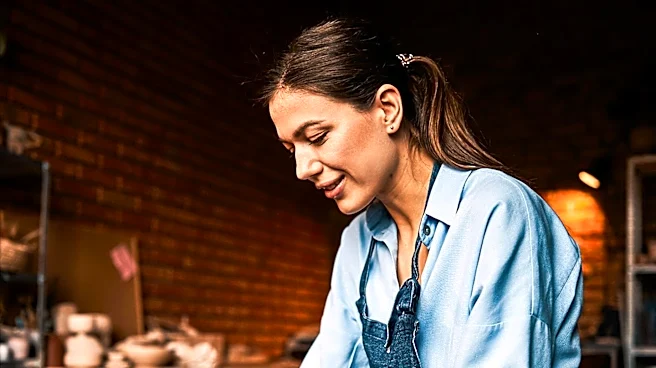
Investment Monitor. This trend is particularly evident among women who are converting their DIY skills into successful businesses. Ndivhuwo Nelwamondo-Dlamini, an accountant, started a DIY business after being retrenched in 2022. She teaches people, especially women, how to build furniture and perform basic household repairs, initially driven by her need to furnish her home without incurring debt. Similarly, Durban entrepreneur Zama Gwamanda, founder of Summer’s Craft Studio, utilizes social media to teach women how to use power tools and improve their homes, building a business around furniture manufacturing, digital DIY plans, and online content. Both women faced challenges in a male-dominated industry but have successfully established multiple income streams through their ventures.
Why It's Important?
The rise of side hustles in South Africa highlights a broader economic reality where a single income is often insufficient for many households. This trend empowers individuals, particularly women, to gain financial independence and develop practical skills. For women like Nelwamondo-Dlamini and Gwamanda, these side hustles not only provide additional income but also challenge traditional gender roles in industries like construction and home improvement. Their success demonstrates the potential for entrepreneurship and skill-sharing to address economic insecurity and foster community empowerment. The use of social media as a business tool also underscores its growing importance in connecting entrepreneurs with customers and building brand presence, especially in niche markets.
What's Next?
The continued growth of the side hustle economy in South Africa suggests that more individuals will likely explore entrepreneurial avenues to enhance their financial stability. There is potential for increased demand for practical skills training, particularly in DIY and home improvement, as more people seek cost-effective solutions for their homes. The success stories of women like Nelwamondo-Dlamini and Gwamanda could inspire further initiatives aimed at empowering women in traditionally male-dominated fields. Additionally, the role of social media as a platform for business growth and skill dissemination is expected to expand, offering new opportunities for entrepreneurs to reach wider audiences and build sustainable income streams.
Beyond the Headlines
The emergence of DIY-focused side hustles among South African women reflects a deeper societal shift towards self-reliance and resourcefulness in the face of economic challenges. It also highlights the innovative ways individuals are leveraging digital platforms to create economic opportunities and build communities around shared interests. This movement has the potential to foster greater gender equality by breaking down barriers in industries historically dominated by men and by promoting the value of practical skills. Furthermore, it underscores the importance of accessible education and skill-building resources, as many of these entrepreneurs learned their trades through online tutorials, demonstrating a bottom-up approach to economic development and empowerment.