





What's Happening?
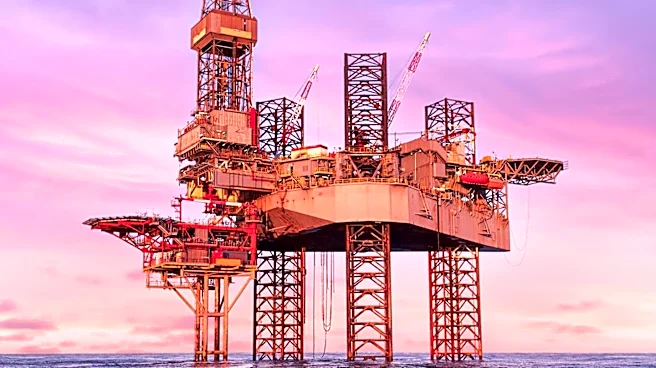
Equinor, a company partly owned by the Norwegian state, reported an adjusted operating profit of $12.35 billion in the third quarter of 2026, marking its best result since late 2022. This financial boost comes as the company is accelerating the development
of Wisting, which is set to become the world’s northernmost oil field. The Wisting field is located approximately 300 km north of the Norwegian mainland and about 50 km south of the Arctic sea ice edge. Equinor had previously postponed the investment decision for the project in 2022 but is now pushing forward with its development. This renewed push occurs despite explicit warnings from the European Union, which, in its revised Arctic strategy, emphasized that Arctic hydrocarbons should remain in the ground. Environmental organizations have also strongly cautioned against the Wisting project, citing potential severe harm to marine life from a possible oil spill.
Why It's Important?
The development of the Wisting oil field by Equinor carries significant environmental and geopolitical implications that could indirectly affect U.S. interests. The EU's stance against Arctic hydrocarbon extraction reflects a broader international push for climate action and a transition away from fossil fuels. If a major oil spill were to occur in the Arctic, it could have devastating ecological consequences, impacting shared migratory species and global climate patterns, which in turn could affect U.S. environmental policy and resource management. Furthermore, increased industrial activity in the Arctic, driven by oil and gas exploration, contributes to the melting of sea ice and thawing permafrost, phenomena that directly impact global sea levels and weather patterns, potentially exacerbating extreme weather events in the U.S. The economic rationale for developing such a high-risk project, fueled by increased oil and gas prices due to international conflicts, highlights the ongoing tension between energy security and environmental sustainability, a debate that resonates within U.S. energy policy discussions.
What's Next?
Equinor is proceeding with the development of the Wisting oil field, having submitted a proposed environmental impact assessment program for public consultation earlier this year and awarding a contract for a front-end engineering and design study. The Norwegian Green Party, represented by Frøya Skjold Sjursæther, has welcomed the EU’s stance and plans to demand a halt to all oil exploration in the Barents Sea during upcoming budget negotiations, specifically calling for the Wisting project to be scrapped. This indicates a continued political and environmental battle over the project's future. The outcome of these negotiations and the ongoing public and political pressure will determine whether Equinor can proceed without further delays or if the project will face renewed opposition and potential cancellation. The international community, including environmental groups and potentially U.S. policymakers, will likely monitor these developments closely due to the project's significant environmental risks and its implications for Arctic policy.
Beyond the Headlines
The Equinor case in the Arctic highlights a critical global dilemma: the immediate economic benefits derived from fossil fuel extraction versus the long-term environmental and climate costs. The EU's explicit warning against Arctic hydrocarbon development signals a growing international consensus on the need to protect this fragile region, which is disproportionately affected by climate change. This situation could set a precedent for how other nations, including the U.S., approach resource extraction in sensitive environments. The conflict between corporate profit motives, national energy security, and global environmental mandates raises profound ethical questions about intergenerational equity and the responsibility of current generations to preserve natural resources. The Wisting project also underscores the complex interplay between geopolitical events, such as the wars in Ukraine and the Middle East, and their impact on global energy markets, which can inadvertently accelerate environmentally risky ventures. This dynamic illustrates the intricate web of factors influencing climate action and the transition to renewable energy sources.