







What's Happening?
Turkish Airlines (THY) is pursuing an ambitious goal to become the first Turkish company and potentially the first airline to be recognized among the top 100 most valuable global brands. This objective, articulated by CEO Ahmet Olmuştur, involves a strategic
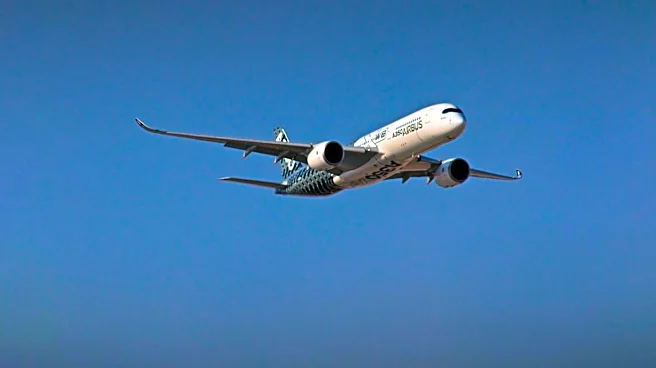
focus on value-driven growth alongside volume expansion. The airline plans to enhance customer experience across 122 touchpoints, from website interaction to in-flight services and baggage delivery. Key initiatives include the upcoming launch of a Premium Economy class, featuring greater recline, more legroom, and an improved dining experience, with a widespread rollout targeted for 2029. THY is also reassessing its fleet, initiating a tender for regional aircraft for integration in late 2028, and increasing its long-range, high-capacity aircraft, particularly models with 400 seats. These efforts are designed to bolster Istanbul Airport's role as a leading global hub by connecting a significant daily passenger count to the city and onward to THY's extensive flight network. The airline has already demonstrated high operational efficiency with its Airbus A350 and Boeing 787 Dreamliner fleets in 2025-2026, with one A350 logging an average of 17 hours and 20 minutes of daily flight duration last year.
Why It's Important?
Turkish Airlines' pursuit of a top 100 global brand ranking signifies a broader trend of emerging market companies aiming for international prominence and challenging established global players. For the U.S. airline industry, this could mean increased competition, particularly in international routes and for connecting traffic through major hubs. As THY expands its fleet and enhances its offerings, it could attract more passengers who might otherwise choose U.S. or European carriers for long-haul international travel. The emphasis on customer experience and premium services also sets a higher bar for the global airline industry, potentially prompting U.S. carriers to innovate and upgrade their own services to remain competitive. Furthermore, the strengthening of Istanbul Airport as a leading hub could shift global air traffic patterns, impacting alliances and partnerships that U.S. airlines have with other international carriers. The investment in advanced aircraft and technology also highlights the ongoing modernization and efficiency drives within the aviation sector, which U.S. manufacturers like Boeing stand to benefit from through aircraft sales.
What's Next?
Turkish Airlines will continue its fleet reassessment and tender process for regional aircraft, with integration expected in the second half of 2028. The widespread rollout of the Premium Economy class is targeted for 2029, which will involve cabin upgrades across its fleet. The airline will also proceed with route expansion efforts, including new flights to Chengdu, China, set to launch on November 11, and the resumption of flights to Minsk, Belarus, on September 20. Further efforts will focus on bolstering the Miles&Smiles loyalty program, which has already surpassed 25 million members, and expanding its logistics operations by redirecting cargo capacity to high-demand markets. The company will also continue to integrate technological solutions, such as its AI-powered TK Assistant, to handle passenger inquiries. These steps are all part of the long-term strategy to achieve the top 100 global brand status and solidify Istanbul Airport's position as a critical international aviation hub.
Beyond the Headlines
The ambition of Turkish Airlines to become a top 100 global brand extends beyond mere financial valuation; it reflects a strategic national effort to enhance Turkey's global soft power and economic influence. By positioning its flag carrier as a leading international brand, Turkey aims to project an image of modernity, efficiency, and global connectivity. This initiative could have cultural implications, as increased air travel and connectivity often lead to greater cultural exchange and tourism, potentially influencing perceptions of Turkey on a global scale. Ethically, the focus on customer experience and employee insights suggests a commitment to service quality and internal development, which could serve as a model for other large corporations. The expansion of Istanbul Airport as a mega-hub also raises environmental considerations regarding increased air traffic and carbon emissions, which will require sustainable operational practices to mitigate. This move also highlights the growing competition among global cities to become aviation gateways, with significant economic and geopolitical ramifications.