






What's Happening?
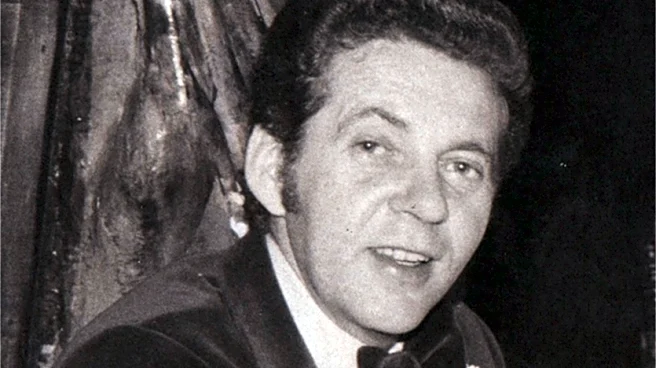
Gage Clarke, an American character actor, established a prolific presence in television during the 1950s and 1960s, particularly through recurring and guest roles in acclaimed westerns and dramas. His versatility allowed him to portray authoritative or quirky
supporting figures, meeting the era's demand for seasoned performers capable of embodying everyday townspeople, officials, and moral anchors in episodic storytelling. Clarke's early television career began in 1949 with appearances in anthology series like 'Suspense' and 'Kraft Television Theatre.' A significant breakthrough occurred in 1952 with his recurring role as Mr. Bascomb, the fastidious school superintendent, on the NBC sitcom 'Mister Peepers,' where he appeared in 12 episodes. His performances leveraged his extensive stage experience, transferring skills like precise timing and audience engagement to the immediacy of live television broadcasts.
Why It's Important?
Gage Clarke's career exemplifies the crucial role of character actors in shaping the golden age of American television. His consistent presence in popular shows like 'Maverick' and 'Gunsmoke' provided essential depth and texture to these narratives, making him a recognizable and dependable screen presence. By portraying a range of characters from timid bankers to hotel clerks and school superintendents, Clarke contributed to the realism and relatability of these fictional worlds. His ability to inject humor and gravitas into his roles helped define the tone of many iconic series, demonstrating how supporting actors are vital to a show's success and audience engagement. His work underscored the demand for versatile performers who could adapt to the fast-paced production schedules of early television, solidifying his reputation as a reliable and skilled actor.
What's Next?
While Gage Clarke's career concluded with his passing in 1964, his extensive body of work continues to be accessible through reruns and streaming services, allowing new generations to appreciate his contributions to television history. His performances in classic westerns and dramas remain a testament to the enduring appeal of well-crafted character acting. The legacy of actors like Clarke influences contemporary casting and storytelling, as creators often seek performers who can bring similar depth and nuance to supporting roles. His career serves as a historical benchmark for the evolution of television acting and the importance of a strong ensemble cast in episodic storytelling.
Beyond the Headlines
Gage Clarke's career highlights the often-underestimated impact of character actors on popular culture. While lead actors typically garner the most attention, it is often the supporting cast who provide the foundational elements that make a series memorable and believable. Clarke's consistent portrayal of various archetypes, from the officious to the endearing, reflects broader societal roles and expectations of the time. His work in live television also offers a glimpse into the technical challenges and artistic demands of early broadcasting, where actors had to deliver flawless performances with minimal rehearsals. This era of television production fostered a unique skill set that is less common in today's pre-recorded and heavily edited productions, underscoring a significant shift in the craft of acting for the screen.