
What's Happening?
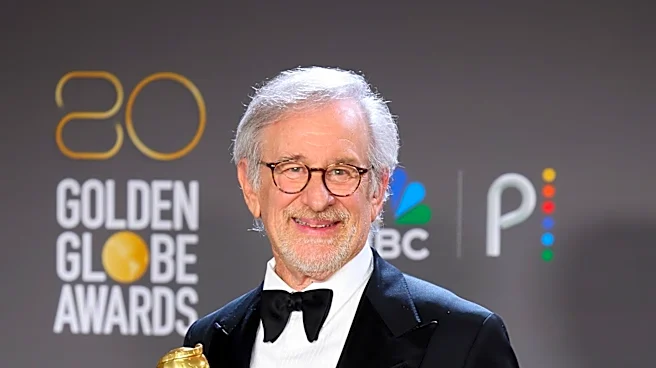
Steven Spielberg's 1979 film, '1941,' a comedic take on the panic in Los Angeles following the Pearl Harbor attack, was met with significant criticism and is considered one of his least appreciated works.
Prior to its release, Hollywood icon John Wayne, who Spielberg had hoped to cast as General Joseph Stilwell, strongly disapproved of the script. Wayne reportedly called the film "very anti-American" and advised Spielberg not to make it, stating, "Don't joke about World War II." Despite having directed successful films like 'Jaws' and 'Close Encounters of the Third Kind' by then, Spielberg's attempt at a military parody did not resonate with audiences or critics, earning a low rating on platforms like AlloCiné. The film's blend of spectacle, historical satire, and exaggerated humor was largely misunderstood, marking a notable misstep in Spielberg's early career.
Why It's Important?
The reception of '1941' highlights the delicate balance between artistic freedom and public perception, especially when dealing with sensitive historical events like World War II in the U.S. John Wayne's strong reaction underscores a prevailing sentiment at the time regarding the solemnity of the war and the perceived inappropriateness of comedic portrayals. This incident reflects a cultural sensitivity that filmmakers must navigate, particularly when reinterpreting national traumas. For the American film industry, '1941' serves as a case study in how even established directors can misjudge audience expectations, leading to commercial and critical underperformance. It also illustrates the potential for generational and ideological divides in how historical events are depicted and consumed, influencing future approaches to war-themed cinema.
What's Next?
While '1941' remains a less celebrated part of Steven Spielberg's filmography, its availability on streaming platforms like Netflix and Apple TV+ (for 'Masters of the Air,' a later, more serious WWII production) allows for re-evaluation by contemporary audiences. This re-exposure could lead to new interpretations of the film's intent and execution, potentially shifting its critical standing over time. For Spielberg, the experience with '1941' clearly influenced his subsequent, more somber and critically acclaimed approaches to World War II, such as 'Schindler's List' and 'Saving Private Ryan.' This trajectory suggests that the initial misstep served as a learning experience, guiding his future artistic choices and solidifying his reputation as a master of historical drama.
Beyond the Headlines
The controversy surrounding '1941' delves into the broader ethical considerations of artistic representation, particularly when humor is applied to historical suffering. John Wayne's patriotic stance reflected a segment of the American public that viewed World War II as a sacred event, not to be trivialized. This tension between artistic license and cultural reverence is a recurring theme in American arts. The film's failure to connect also points to the challenge of satire: for it to be effective, there must be a shared understanding of the target and the message. In the case of '1941,' the humor may have been perceived as disrespectful rather than insightful, revealing a cultural boundary around how national sacrifices are remembered and portrayed in popular media.