






What's Happening?
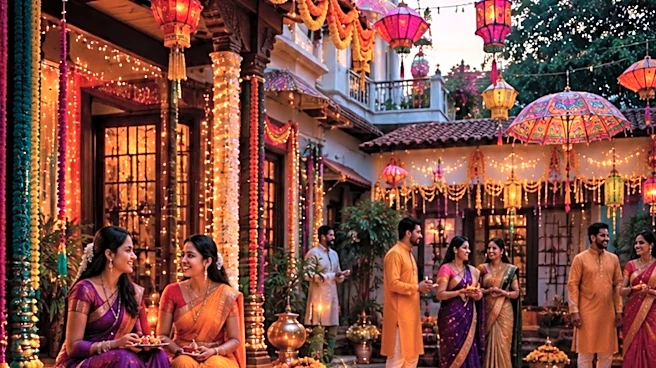
Diwali, the festival of lights, is celebrated in diverse forms across South Asia and the Himalayas, with its name derived from the Sanskrit 'Deepavali,' meaning 'a garland of lamps.' This festival fundamentally marks a passage from darkness into light,
ignorance into knowledge, and despair into hope. In Nepal's Kathmandu Valley, the festival is known as Tihar, or Swanti among Newar communities, and unfolds over five days. The first day involves offerings to crows to ward off 'ill omens,' while the second day honors dogs for their loyalty. The third day is dedicated to cows and the goddess Lakshmi, with homes illuminated by oil lamps. Newar communities also observe Mha Puja, a ritual of self-worship. The festival concludes with Bhai Tika, celebrating the bond between brothers and sisters, where sisters pray for their brothers' long lives and apply a multicolored tika.
Why It's Important?
The diverse celebrations of Diwali and Tihar highlight the profound cultural and spiritual significance of renewal and interconnectedness across various communities. The emphasis on honoring animals like crows, dogs, and cows underscores a deep respect for the natural world and its role in human life, a perspective that can offer valuable lessons in an increasingly disconnected society. The Mha Puja ritual, focusing on self-worship and recognizing one's own body and life force as sacred, promotes self-care and introspection, which are crucial for individual well-being. The Bhai Tika tradition reinforces familial bonds, emphasizing the importance of community and support systems. These practices collectively illustrate a holistic vision of renewal that extends beyond individual prosperity to encompass family, community, and the environment, providing a rich cultural framework for understanding human relationships and spiritual growth.
What's Next?
The continued celebration of Diwali and Tihar ensures the preservation of rich cultural traditions and their underlying values. As these festivals are observed annually, they offer recurring opportunities for communities to reinforce their cultural identity, strengthen familial ties, and reflect on themes of light, knowledge, and hope. Educational initiatives and cultural exchanges can further promote understanding of these diverse practices, fostering appreciation for the varied ways in which people celebrate renewal and interconnectedness. The global spread of these festivals, particularly among diaspora communities, means that their influence and visibility will continue to grow, potentially inspiring broader conversations about cultural heritage, spiritual practices, and the importance of community bonds in a globalized world.
Beyond the Headlines
The core message of Diwali—the triumph of light over darkness and knowledge over ignorance—carries universal resonance that extends beyond its religious and cultural origins. In a contemporary context, this theme can be interpreted as a call for critical thinking, enlightenment, and overcoming societal challenges. The emphasis on warding off 'ill omens' and honoring various aspects of life, from animals to self, speaks to a holistic worldview that values balance and harmony. This perspective offers a counter-narrative to purely materialistic or individualistic societal trends, promoting a deeper connection to one's inner self, family, community, and the natural world. The festival's enduring popularity and diverse interpretations underscore humanity's universal quest for meaning, hope, and renewal in the face of life's complexities.