








What's Happening?
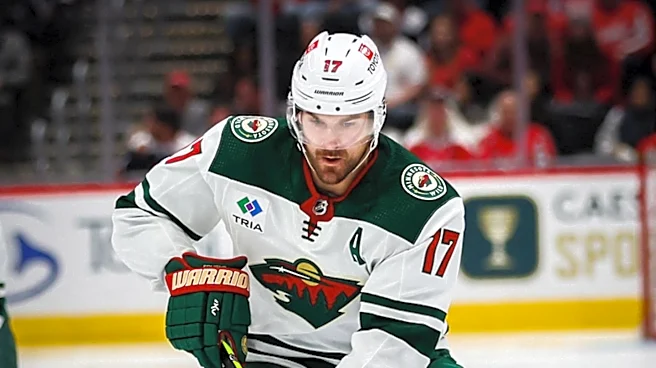
The NHL is initiating a local broadcast operation for the 2026-2027 season, involving four teams: the Carolina Hurricanes, Columbus Blue Jackets, Minnesota Wild, and St. Louis Blues. This move comes as regional sports networks (RSNs) like FanDuel, which
previously managed local broadcasts for numerous teams, are shutting down. The NHL's new production unit aims to centralize local broadcasts, providing a unified hub for fans to access games. This approach contrasts with the more aggressive strategies of the NBA and MLB, which are also transitioning local broadcasts in-house. The NHL's strategy is to offer support to teams as needed, with the Anaheim Ducks potentially joining the operation soon.
Why It's Important?
This development is significant as it reflects a broader shift in how professional sports leagues manage local broadcasting rights. The decline of RSNs has prompted leagues to explore new models to ensure fans can access games. By centralizing broadcasts, the NHL aims to streamline access and potentially increase revenue through local exposure. This move could impact how fans engage with the sport, offering more consistent and potentially enhanced viewing experiences. It also highlights the challenges leagues face in adapting to changing media landscapes and the need for innovative solutions to maintain fan engagement and revenue streams.
What's Next?
As the NHL implements this new broadcast model, other teams may join the centralized operation, especially those affected by the closure of RSNs. The league will likely monitor the success of this approach and adjust strategies as needed. Stakeholders, including teams and broadcasters, will be watching closely to see how this impacts viewership and revenue. The NHL's approach may influence other leagues considering similar transitions, potentially leading to broader changes in sports broadcasting.