









What's Happening?
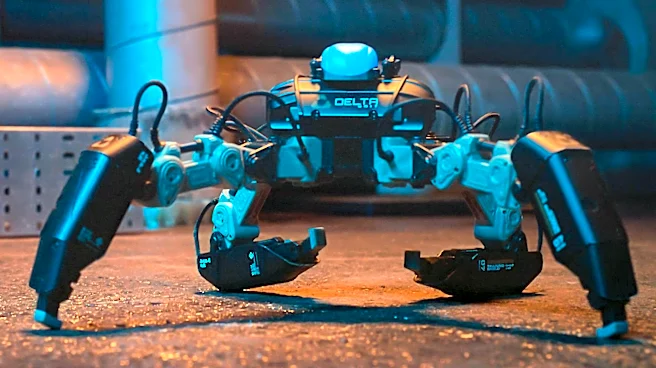
ExRobotics has launched its UL-certified ExR-2.5 autonomous inspection robot in North America, targeting the oil and gas industry. The launch took place at the Energy Drone & Robotics Summit in Houston. The ExR-2.5 is designed to tackle the industry's
challenges, such as workforce shortages, aging infrastructure, and the high costs of unplanned downtime. The robot performs safety inspections and collects real-time data across various operations, including onshore, offshore, and liquefied natural gas facilities. It uses acoustic imaging sensors to detect gas leaks and mechanical faults, high-resolution cameras for visual inspections, and thermal imaging to identify overheating equipment. The system is certified under UL 6260, ensuring safety in hazardous environments.
Why It's Important?
The introduction of the ExR-2.5 robot is significant for the oil and gas industry, which faces a shortage of skilled workers and increasing operational risks due to aging infrastructure. By automating inspections, the robot reduces the need for human exposure to hazardous environments and helps maintain operational safety and efficiency. This technology addresses the industry's need for reliable inspection solutions, potentially reducing downtime costs, which can exceed $5 million for a midsize facility. The certification by UL Solutions provides confidence in the robot's safety, facilitating its adoption in environments with explosive gases or combustible dusts.
What's Next?
ExRobotics plans to conduct live demonstrations of the ExR-2.5 at the Energy Drone & Robotics Summit, allowing industry stakeholders to witness its capabilities firsthand. The company, along with its North American partner MicroWatt, aims to expand the deployment of these robots across the continent. As the industry increasingly turns to automation to address workforce and infrastructure challenges, the adoption of certified robotic technologies like the ExR-2.5 is expected to grow, potentially setting a new standard for safety and efficiency in hazardous environments.