







What's Happening?
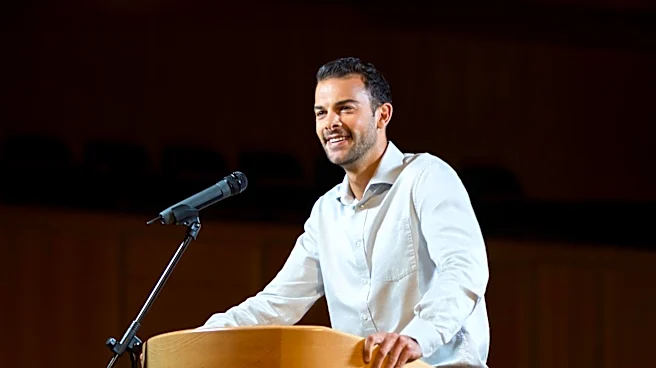
Kory Marchisotto, President of e.l.f. Beauty, recently visited the University of California, Berkeley, Haas School of Business. She engaged with students as part of the 12-week 'Change the Board Game' course, a collaborative initiative with the Undergraduate
Marketing Association and The Berkeley Forum. Marchisotto shared her career journey, emphasizing the importance of aligning with one's 'frequency' in professional pursuits. She recounted her path from early jobs in various sectors to a nearly 30-year career in the beauty industry, highlighting how each experience, from a bagel shop to a nail salon, contributed to her understanding of community, human connection, and collaboration. A key message from her address was the significance of access in career development, particularly for women and people of color in corporate leadership roles. The 'Change the Board Game' program aims to double the rate at which these demographic groups are appointed to U.S. public company boards by 2027, addressing the belief that talent is not the issue, but rather access to opportunities.
Why It's Important?
This engagement underscores a significant effort to promote diversity and inclusion within U.S. corporate boardrooms. The 'Change the Board Game' initiative, supported by e.l.f. Beauty, directly addresses the underrepresentation of women and people of color in top leadership positions. By partnering with academic institutions like the Haas School of Business, the program aims to equip the next generation of leaders with the tools and perspectives needed to navigate and influence corporate structures. Marchisotto's personal narrative serves as an inspiration, demonstrating that diverse career paths can lead to executive roles and that early experiences, regardless of industry, build foundational skills. The initiative's goal to double the representation of women and people of color on U.S. public company boards by 2027 could lead to more equitable decision-making, broader perspectives in corporate strategy, and potentially improved financial performance for companies that embrace diversity. This effort highlights a growing recognition within the business community that diverse leadership is not just a matter of fairness but also a strategic imperative.
What's Next?
The 'Change the Board Game' course will continue its 12-week curriculum at the Haas School of Business, providing students with insights and mentorship aimed at fostering future diverse leaders. The ongoing collaboration between e.l.f. Beauty, the Undergraduate Marketing Association, and The Berkeley Forum suggests a sustained commitment to this initiative. Future steps may involve expanding the program to other universities or developing additional resources to support its mission of increasing boardroom diversity. As the 2027 target approaches, there will likely be increased scrutiny and reporting on the progress made in diversifying U.S. public company boards. Companies and organizations involved in similar initiatives may look to e.l.f. Beauty's model for best practices. The continued advocacy from corporate leaders like Kory Marchisotto is expected to encourage more companies to prioritize diversity in their leadership pipelines and board appointments, potentially leading to broader industry-wide changes in corporate governance and talent development.
Beyond the Headlines
The visit by Kory Marchisotto to the Haas School of Business transcends a typical corporate lecture, delving into deeper societal implications regarding equity and opportunity. It highlights a shift in corporate responsibility, where companies like e.l.f. Beauty are actively engaging in social change beyond their primary business operations. The emphasis on 'frequency alignment' as a guiding principle for career choices touches upon the psychological and emotional aspects of professional fulfillment, suggesting that authenticity and personal values are increasingly important in career development. Furthermore, the initiative to 'Change the Board Game' challenges systemic barriers that have historically limited access for underrepresented groups. This effort could contribute to a broader cultural shift in how talent is identified, nurtured, and promoted within corporate America, moving beyond traditional networks and biases. The long-term impact could be a more inclusive and representative corporate landscape that better reflects the diversity of the U.S. population, fostering innovation and resilience in the business sector.