








What's Happening?
John Hennessy, Stanford president emeritus and current Alphabet chairman, emphasizes the importance of humble leadership and views Artificial Intelligence (AI) as a tool for human augmentation rather than replacement. Hennessy defines humility in leadership as being
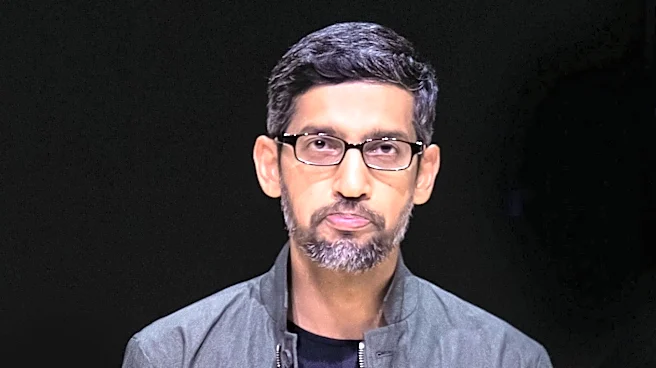
open, receptive to criticism, and willing to ask for help, citing leaders like Sundar Pichai as examples. He argues that this approach fosters an environment where team members feel comfortable providing honest feedback. Regarding AI, Hennessy believes its true potential lies in enhancing human capabilities, not in fully automating tasks. He acknowledges the unprecedented scale of capital investment in AI data centers but cautions against overestimating AI's ability to completely replace human functions while underestimating its capacity to augment specific human tasks. He also highlights the underfunded risk of AI misuse and the need for industry and government collaboration on safeguards.
Why It's Important?
John Hennessy's perspective, as a prominent figure in both academia and the tech industry, carries significant weight for the U.S. technology sector and leadership development. His advocacy for humble leadership challenges traditional notions of executive authority, promoting a more collaborative and feedback-driven management style that can foster innovation and resilience within organizations. His views on AI are crucial for shaping public and corporate understanding of this transformative technology. By emphasizing AI as an augmentation tool, he steers the conversation away from job displacement fears towards opportunities for enhanced productivity and problem-solving. This perspective can influence investment strategies, educational curricula, and public policy debates around AI development and deployment, encouraging a more human-centric approach to technological advancement and responsible innovation.
Beyond the Headlines
John Hennessy's insights delve into the ethical and societal dimensions of AI and leadership. His emphasis on humility in leadership suggests that effective governance in the age of powerful AI requires leaders who are not only technically proficient but also self-aware and open to diverse perspectives. This is particularly critical as AI systems become more complex and their societal impacts more profound, necessitating leaders who can navigate ethical dilemmas and unintended consequences. Furthermore, his concern about the underfunded risk of AI misuse highlights a critical gap in current development strategies. This calls for a proactive approach to AI safety and regulation, involving not just tech companies but also government and academic institutions, to prevent potential harms. The challenge lies in fostering a culture of responsible AI development that balances innovation with robust safeguards, ensuring that AI serves humanity's best interests rather than exacerbating existing societal problems or creating new ones.