


What's Happening?
Architect Karen Karapetian of Alexander Tischler has completed a unique 84-square-meter apartment project, dubbed 'Back in the U.S.S.R.', which draws heavily on the owners' nostalgic memories of their Soviet childhood. The design explicitly bans the color
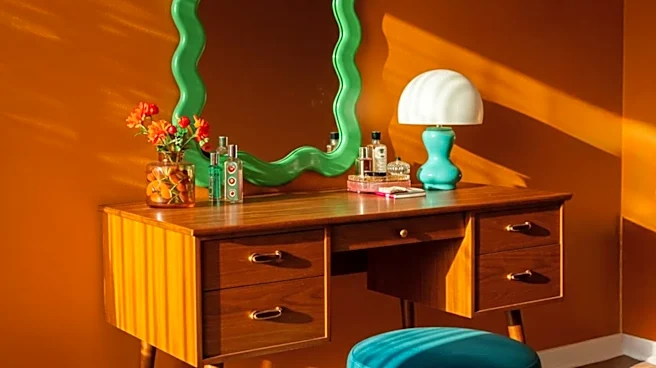
gray, opting instead for a vibrant palette of pistachio, amber, terracotta, olive-green, and turquoise. The apartment incorporates retro elements such as herringbone parquet, glass blocks, small tiles, and brass-finished sanitary-ware, aiming to create a contemporary space that evokes warmth and personal history without becoming a pastiche. The project also features complex engineering solutions, including integrated storage, soundproofing, and climate control, all concealed behind a vintage aesthetic. The design prioritizes functionality while maintaining a playful and sophisticated atmosphere, reflecting the clients' desire for lively colors and smooth lines reminiscent of their past.
Why It's Important?
This project highlights a growing trend in interior design where personal history and nostalgic elements are integrated into modern living spaces. The explicit rejection of 'cold monochrome' interiors, particularly gray, signals a shift towards more expressive and color-rich environments in residential design. This approach can influence broader design trends, encouraging homeowners and designers to explore bolder palettes and incorporate sentimental items rather than adhering to minimalist or neutral aesthetics. The successful blend of advanced technology with vintage coziness demonstrates that modern comforts can coexist with historical charm, potentially inspiring new directions in architectural and interior design practices. It also underscores the psychological impact of design, where spaces are crafted to evoke specific emotions and memories, enhancing the residents' well-being and connection to their home.
What's Next?
The success of projects like 'Back in the U.S.S.R.' may lead to increased demand for personalized, memory-infused interior designs, potentially influencing the offerings of design firms and furniture manufacturers. We might see a rise in bespoke design services that focus on translating clients' personal histories and nostalgic preferences into their living environments. Furthermore, the emphasis on vibrant color palettes and retro materials could inspire a broader movement away from minimalist trends, encouraging more diverse and expressive interior aesthetics in the market. This could also prompt manufacturers to reintroduce or innovate with materials like glass blocks and specific tile patterns that evoke a sense of nostalgia, catering to a renewed interest in historical design elements within a modern context.
Beyond the Headlines
Beyond its aesthetic appeal, this project touches upon deeper cultural and psychological dimensions of home design. The deliberate incorporation of elements from a 'Soviet childhood' suggests a desire to reclaim and reinterpret personal history, transforming potentially complex memories into a source of comfort and joy within a contemporary setting. This approach challenges the notion that modern design must always look forward, instead demonstrating the power of integrating the past to create a richer, more meaningful present. The 'ban on gray' can be seen as a symbolic rejection of perceived monotony or austerity, advocating for spaces that actively promote warmth, vibrancy, and individuality. This could foster a broader conversation about how our living environments reflect and shape our identities and emotional landscapes.