








What's Happening?
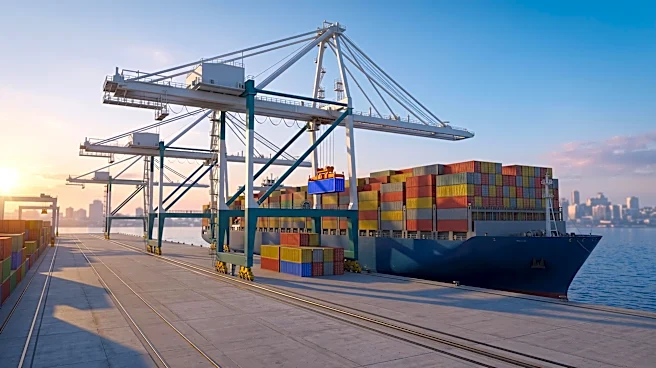
Construction has commenced on the new Delaware Container Terminal (DCT) at the Port of Wilmington. This project aims to significantly expand the port's capacity, enabling it to accommodate larger container ships of up to 16,000 TEU and handle 1.2 million
TEU annually. The terminal will feature an 825-meter long, 14-meter deep pier, seven electric quay gantry cranes, and 24 electric rubber-tired gantry cranes. Strategically located near major metropolitan areas like Philadelphia, Baltimore, Washington D.C., and New York, DCT is designed to enhance regional transportation networks and improve access to goods. The project is a public-private partnership between Enstructure and the state of Delaware, with a total investment of $669 million. This includes $225 million from Enstructure, $325 million from the State of Delaware, and $119 million in federal grants from the Department of Transportation and the Environmental Protection Agency (EPA) for zero-emission port equipment through the Clean Ports Grant Program. Senator Lisa Blunt Rochester and U.S. Representative Sarah McBride have expressed support, highlighting job creation and supply chain strengthening.
Why It's Important?
The development of the Delaware Container Terminal is crucial for bolstering the U.S. supply chain and regional economy. By quadrupling the Port of Wilmington's container cargo capacity and allowing larger vessels, it will significantly improve the efficiency of goods movement along the Northeast Corridor, a less congested alternative to other major ports. This expansion is expected to create thousands of jobs in the maritime, construction, supply chain, and logistics sectors, providing well-paying employment opportunities for Delaware families. Economically, DCT will offer cost advantages for logistics to industrial markets in the Mid-Atlantic and Northeast, serving a consumer base of 50 million within a 400-kilometer radius. The project's emphasis on cleaner energy practices, supported by the Clean Ports Program, also signifies a commitment to environmental sustainability in port operations, potentially setting a precedent for future port developments nationwide.
What's Next?
The Delaware Container Terminal is projected to open in early 2029. As construction progresses, the focus will be on the integration of advanced port technology, including electric gantry cranes, to ensure operational efficiency and environmental compliance. The federal grants allocated for zero-emission equipment will facilitate the adoption of cleaner energy practices, which will be a key aspect of the terminal's operation. Stakeholders, including shipping lines and cargo owners, will likely begin planning their logistics and supply chain strategies to leverage the new terminal's increased capacity and strategic location. The project's completion will also necessitate ongoing collaboration between Enstructure and the state of Delaware to manage the long-term concession agreement and ensure the terminal's sustained growth and contribution to the regional economy.
Beyond the Headlines
The Delaware Container Terminal project represents a broader trend in U.S. infrastructure development: the strategic investment in port capabilities to enhance global trade competitiveness and supply chain resilience. The public-private partnership model employed here could serve as a blueprint for other states seeking to modernize their maritime infrastructure. Furthermore, the significant federal investment in zero-emission port equipment through the Clean Ports Program underscores a growing national commitment to decarbonizing the transportation sector. This initiative not only addresses environmental concerns but also positions the U.S. at the forefront of sustainable logistics. The long-term implications include potential shifts in shipping routes and logistics hubs, as less congested and more efficient ports like Wilmington become more attractive, influencing regional economic development and job markets beyond the immediate vicinity of the port.