




What's Happening?
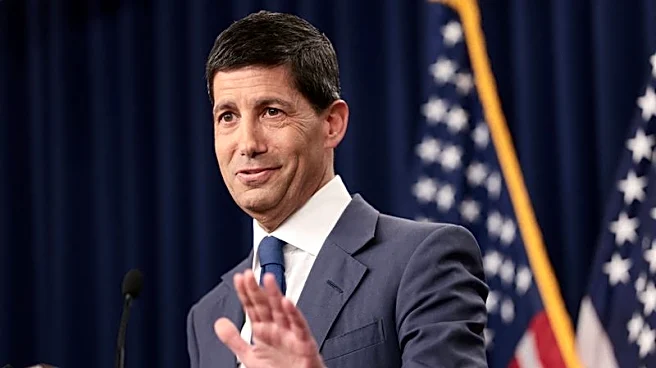
Federal Reserve official Barkin has raised questions about whether the Federal Open Market Committee (FOMC) needs to hike interest rates, as inflation pressures remain a concern. Barkin noted that while some price pressures appear embedded, there are
arguments that inflation may ease due to modest wage pressures and subsiding shocks from tariffs and oil prices. Despite uncertainties, many at the Fed believe the current interest rate level is restrictive enough to bring inflation down. Barkin's comments reflect a broader debate within the Fed about the appropriate monetary policy stance amid mixed economic signals.
Why It's Important?
Barkin's remarks are significant as they highlight the ongoing uncertainty within the Federal Reserve regarding the future path of interest rates. The decision to hold or raise rates has profound implications for the U.S. economy, affecting borrowing costs, consumer spending, and investment. A decision to maintain current rates could support economic growth by keeping borrowing costs low, while a rate hike could help curb inflation but potentially slow down economic activity. The Fed's approach will be closely watched by investors, businesses, and policymakers as they assess the balance between supporting growth and controlling inflation.
What's Next?
The Federal Reserve will continue to monitor economic data closely, including inflation indicators and employment figures, to inform its policy decisions. Future rate decisions will depend on the evolving economic landscape, with potential adjustments if inflationary pressures persist or if economic growth shows signs of weakening. Stakeholders, including businesses and financial markets, will be attentive to any signals from the Fed regarding its policy direction, as these decisions will influence economic conditions and market dynamics.