







What's Happening?
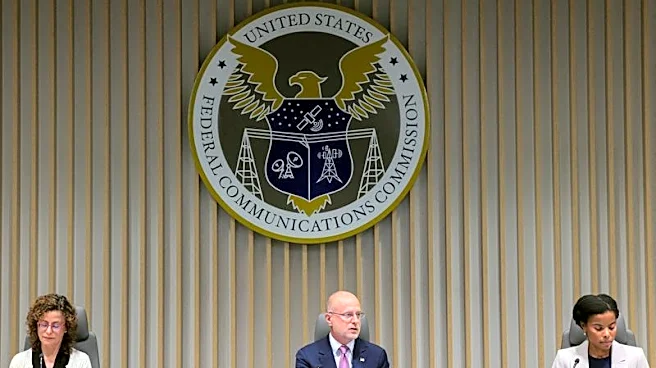
The Federal Communications Commission (FCC) has approved significant reforms in space licensing and cleared additional C-band spectrum for a 5G auction. The decision involves reallocating 160 megahertz in the 3.98-4.14 gigahertz band, following a previous
auction that raised over $80 billion. This move aims to create a 440 MHz 'super band' for wireless networks, with services expected to launch in major U.S. markets by December 2030. The reforms also include a new licensing framework to expedite satellite application processes, supporting the growth of non-geostationary satellite constellations.
Why It's Important?
The FCC's decision is pivotal for the expansion of 5G networks, which are crucial for technological advancement and economic growth. By reallocating C-band spectrum, the FCC is facilitating faster and more reliable wireless services, which can enhance connectivity and drive innovation. The licensing reforms are expected to streamline satellite operations, fostering a more competitive and dynamic space industry. These changes could lead to increased investment in telecommunications and space sectors, benefiting consumers and businesses through improved services and new opportunities.
What's Next?
The upcoming 5G auction and the implementation of new licensing rules will be closely watched by industry stakeholders. Satellite operators, particularly those affected by the spectrum reallocation, will need to adjust their operations and explore alternative frequencies. The FCC's collaboration with the Federal Aviation Administration to ensure safety in adjacent frequency bands will also be critical. As these developments unfold, the telecommunications and space industries may experience shifts in market dynamics and regulatory landscapes.