


What's Happening?
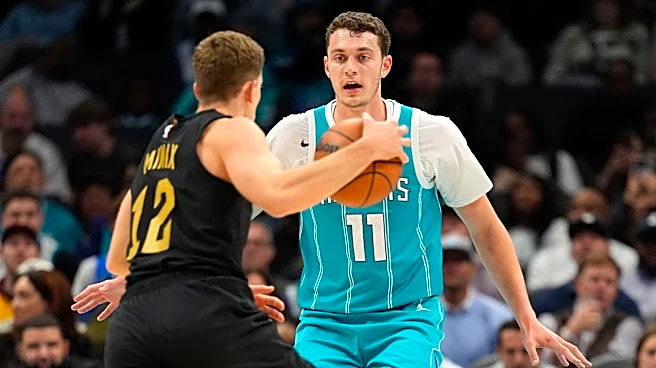
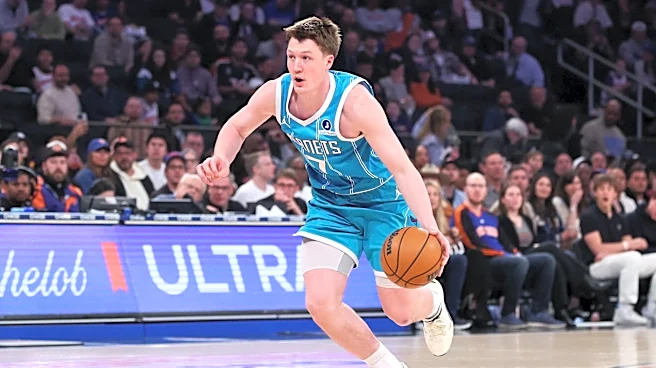
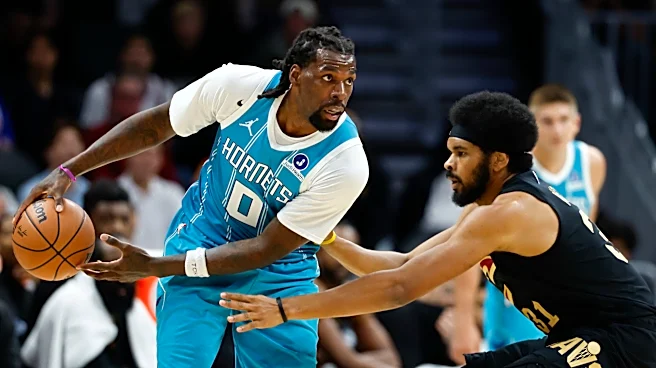
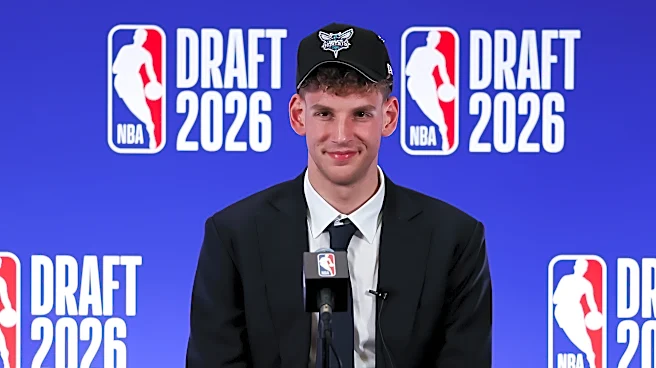
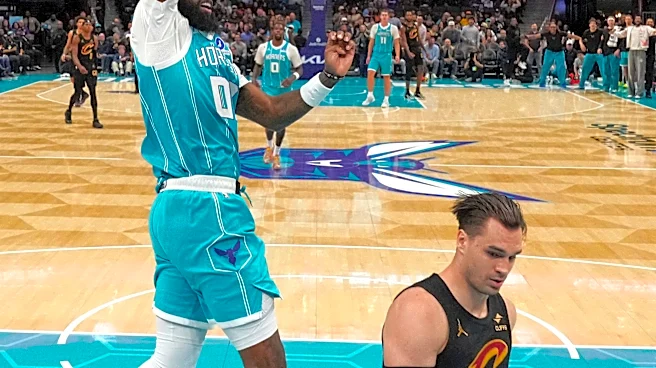
The Charlotte Hornets have declined the fourth-year option for player Tidjane Salaün, a decision that removes his $10 million salary from the team's books for the 2027-28 season. This move comes despite recent 'flashes' of improved performance from Salaün, including
an 'explosive second quarter' in a recent game. The team's decision reflects a broader strategy to manage its salary cap and roster flexibility, especially considering Salaün's inconsistent performance throughout his NBA career. While the Hornets are evaluating his role, particularly with Grant Williams' anticipated return from injury, the long-term implications for Salaün's tenure with the team remain uncertain. Historically, players whose fourth-year options are declined rarely sign long-term deals with the same franchise, though some speculate a 35% chance of Salaün returning to Charlotte on a more team-friendly contract.
Why It's Important?
This decision by the Charlotte Hornets highlights a critical aspect of NBA team management: balancing player development with financial prudence and roster construction. By declining Salaün's option, the Hornets gain significant salary cap flexibility, which is crucial for a team looking to build for future contention. This move allows them to pursue other free agents or retain key players without being constrained by a potentially underperforming contract. For Salaün, it creates uncertainty about his future, potentially forcing him to prove his value in the current season to attract new offers, either from Charlotte or other teams. The situation also underscores the challenges faced by young players in the NBA, where consistent performance is paramount for securing long-term contracts and a stable role within a franchise.
What's Next?
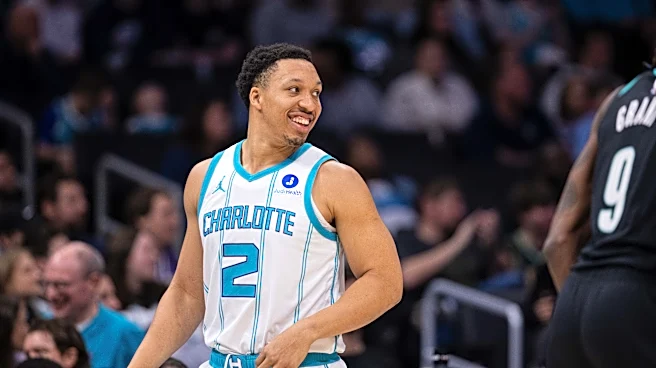
The immediate future for Tidjane Salaün involves proving his worth on the court, especially with the return of Grant Williams potentially limiting his playing time. The Hornets will need to decide whether to continue developing Salaün to showcase him for a potential trade before the deadline or to assess his progress for a possible, albeit less likely, long-term deal. For the team, the freed-up cap space provides options for the upcoming free agency period, allowing them to target players who better fit their long-term vision. The outcome of Salaün's season will be closely watched by both the Hornets' management and other NBA teams, as it will determine his market value and potential landing spots in the next free agency cycle.
Beyond the Headlines
The Hornets' decision regarding Salaün reflects a growing trend in the NBA where teams are increasingly strategic about player contracts and roster flexibility. In an era of rising player salaries and competitive free agency, managing the salary cap effectively is as crucial as on-court performance. This situation also sheds light on the psychological impact on young athletes when their options are declined, potentially affecting their confidence and motivation. It underscores the business side of professional sports, where financial decisions often outweigh sentimental attachments to drafted players, especially when performance does not consistently meet expectations. The case of Salaün could serve as a precedent for how teams handle similar situations with developing players in the future.