





What's Happening?
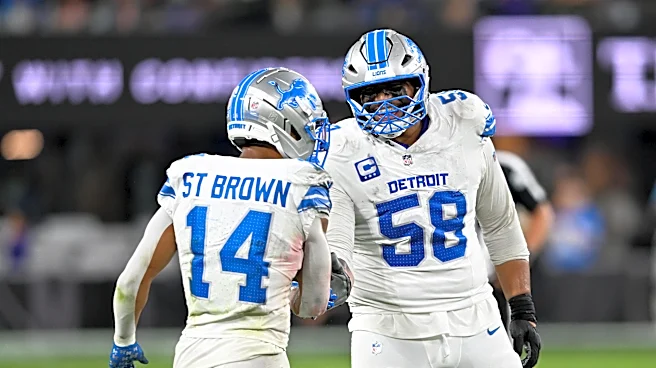
The Detroit Lions have restructured the contracts of two key players, Penei Sewell and Amon-Ra St. Brown, to generate substantial salary cap space for the 2026 season. This strategic financial maneuver has created $35.68 million in additional cap space,
positioning the Lions with the second-most cap room in the NFL, behind only the San Francisco 49ers. The team converted portions of Sewell's and St. Brown's salaries into signing bonuses, a common practice that spreads the cap hit over future years. Specifically, $18.6 million of Sewell's salary and $26 million of St. Brown's salary were converted, reducing their 2026 cap numbers by $14.88 million and $20.8 million, respectively. This action was necessary to ensure the team was salary cap compliant ahead of the regular season, as NFL rules mandate compliance once teams cut down to a 53-player roster.
Why It's Important?
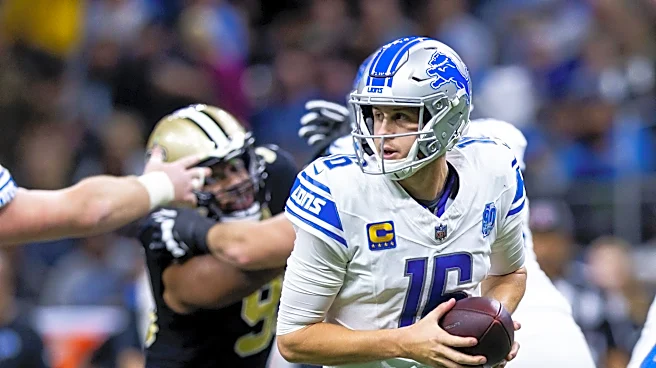
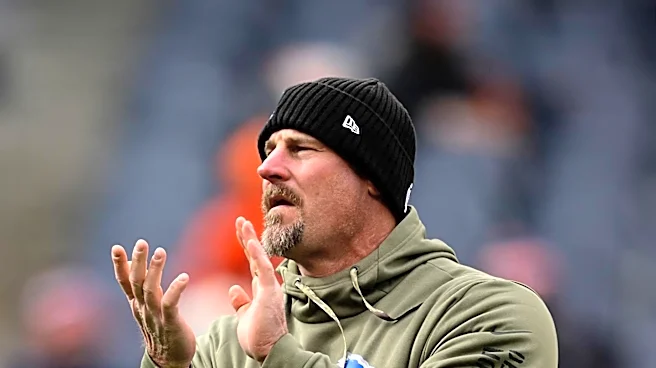
This move is crucial for the Detroit Lions as it provides immediate financial flexibility, allowing them to navigate potential in-season roster adjustments, sign free agents, or address unforeseen injuries without cap constraints. By converting salary into signing bonuses, the Lions are essentially deferring cap charges to future years, which is a calculated risk but a necessary one to remain competitive in the short term. The ability to create significant cap space demonstrates proactive management by General Manager Brad Holmes, ensuring the team can adapt to dynamic roster needs. This financial agility is particularly important in the NFL, where player availability and performance can fluctuate rapidly, and having the means to acquire talent quickly can be a decisive factor in a team's success.
What's Next?
With over $38 million in cap space, the Detroit Lions are now well-positioned to make further roster moves throughout the 2026 season. This financial flexibility could be utilized to sign players from other teams, acquire talent via trades, or extend current players' contracts, such as a potential extension for running back Jahmyr Gibbs, as hinted by Adam Schefter. The team will need to carefully manage the deferred cap hits in future years, potentially through further extensions or restructures, to avoid significant cap challenges down the line. The immediate focus will likely be on monitoring player performance and health, and using the newly acquired cap space to address any emerging needs that could impact their competitive standing.
Beyond the Headlines
The strategy employed by the Detroit Lions highlights a broader trend in NFL team management where financial engineering plays a critical role in roster construction and competitive strategy. While creating immediate cap space is beneficial, it shifts financial obligations to future seasons, potentially creating a 'cap debt.' This approach requires careful long-term planning and a strong belief in the team's core talent to justify the future financial commitments. The decision to restructure contracts for key players like Sewell and St. Brown also signals the organization's commitment to these players as foundational pieces, as their restructured bonuses are guaranteed and spread over multiple years, making them harder to release without significant financial penalties.