









What's Happening?
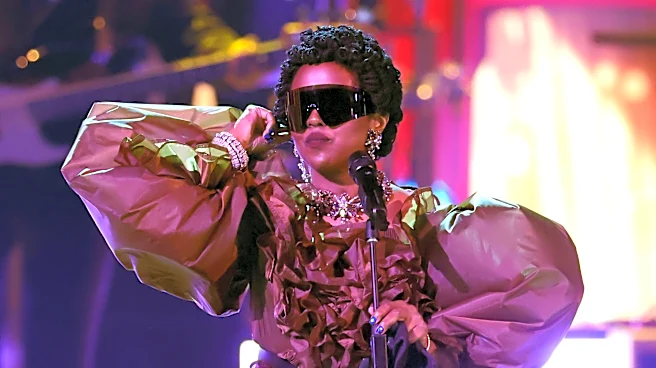
The BET Awards 2026, held at Los Angeles' Peacock Theater, celebrated significant contributions to music and culture. Lauryn Hill was honored with the Living Legend Icon Award, recognizing her enduring influence since her days with the Fugees and her solo
success with 'The Miseducation of Lauryn Hill.' Hill performed her classic 'Ex-Factor' and closed the show with 'Everything Is Everything.' Janet Jackson made a surprise appearance to present Teyana Taylor with the Icon of the Year Award, acknowledging Taylor's impact as a multifaceted artist. The event also included tributes to late music figures like Clive Davis and Richard Smallwood, and honored Sylvia Rhone with the BET Ultimate Icon Award for her groundbreaking role in the music industry.
Why It's Important?
The BET Awards serve as a platform to honor and recognize the contributions of Black artists and industry leaders who have shaped music and culture. Lauryn Hill's recognition underscores her lasting impact on hip-hop and R&B, inspiring new generations of artists. Janet Jackson's presentation to Teyana Taylor highlights the importance of mentorship and legacy in the entertainment industry. The awards also spotlight the evolving role of women in music, with Sylvia Rhone's acknowledgment as a trailblazer in a predominantly male industry. These honors not only celebrate individual achievements but also emphasize the cultural and social influence of Black artists in shaping global music trends.
What's Next?
Following the awards, the honorees and performers are likely to experience increased visibility and opportunities in their careers. Lauryn Hill's performance and recognition may lead to renewed interest in her music and potential new projects. Teyana Taylor's accolade could further her influence in both music and film. The industry may also see a push towards more inclusive and diverse leadership, inspired by Sylvia Rhone's achievements. Additionally, the emphasis on protecting artists' rights in the face of technological advancements, as highlighted by Rhone, could spark discussions and initiatives to safeguard creative work in the digital age.