



What's Happening?
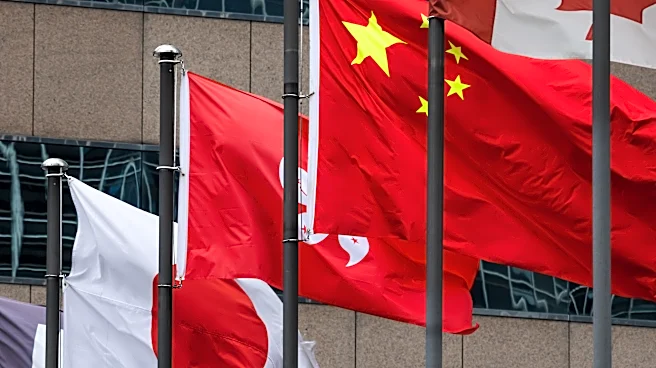
China and Canada have agreed to extend exemption measures under a preliminary joint arrangement on bilateral trade issues for an additional two years. This agreement, announced by China's Ministry of Commerce, will see Canada further expand exemptions
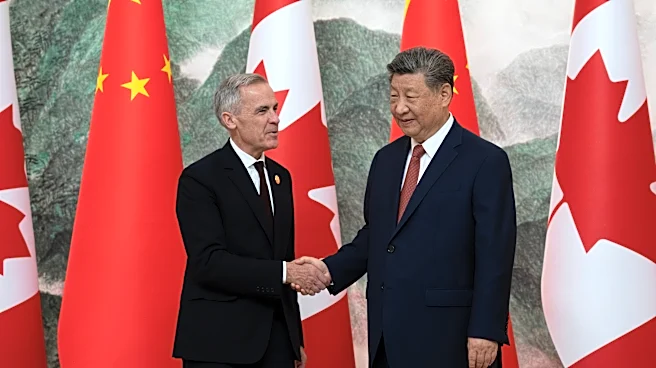
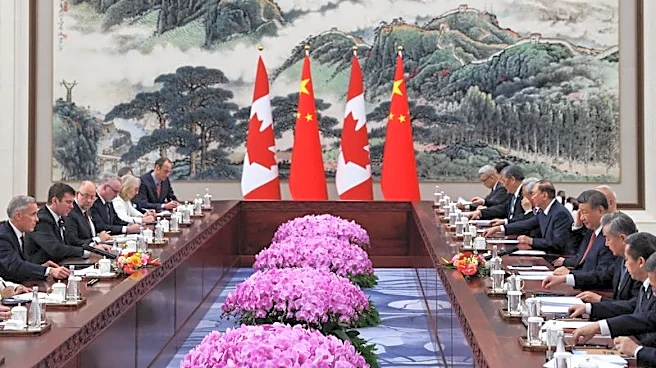
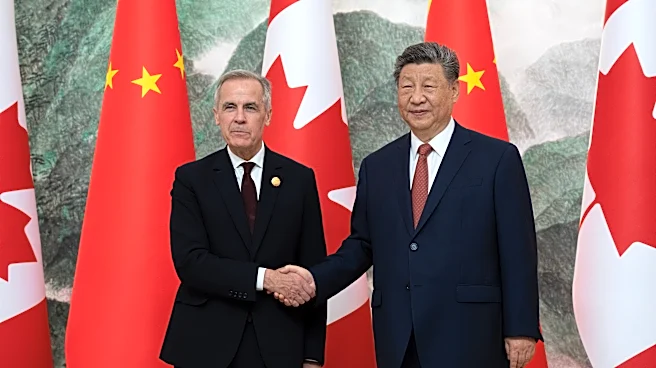
for Chinese steel and aluminum products. In reciprocity, China will adjust anti-discrimination measures on certain Canadian agricultural and aquatic products, adhering to relevant laws and regulations. The spokesperson for the Ministry of Commerce expressed confidence that these arrangements will deepen bilateral economic and trade cooperation, benefiting the populations of both countries. Both nations are expected to expedite their domestic procedures to implement these agreed-upon measures promptly and continue exploring further avenues for economic and trade collaboration. This preliminary joint arrangement was initially established during Canadian Prime Minister Mark Carney's visit to China in January, addressing trade concerns related to electric vehicles, steel, aluminum, and agricultural products.
Why It's Important?
This extension of trade exemptions between China and Canada is significant for several reasons. For Canadian industries, particularly in agriculture and aquaculture, the adjustment of anti-discrimination measures by China could lead to increased market access and potentially higher export volumes, offering a boost to producers. Conversely, Chinese steel and aluminum exporters will continue to benefit from expanded exemptions in Canada, which could help maintain their market share and support production levels. The agreement signals a commitment from both nations to manage trade differences through dialogue and cooperation, potentially stabilizing a key bilateral economic relationship. This could serve as a model for other countries navigating complex trade dynamics, emphasizing mutual respect and win-win cooperation. The continued use of the China-Canada Joint Economic and Trade Commission mechanism underscores the importance of established channels for resolving disputes and fostering economic ties.
What's Next?
Both China and Canada are expected to move swiftly to complete their respective domestic procedures to enact the extended exemption measures. Following this, the focus will shift to monitoring the implementation of these adjustments and assessing their impact on the respective industries. The China-Canada Joint Economic and Trade Commission mechanism will likely play a crucial role in ongoing discussions, aiming to expand cooperation, address any emerging issues, and manage differences. Further arrangements to deepen economic and trade cooperation are anticipated, potentially including discussions on e-commerce collaboration, the establishment of Chinese-funded bank branches in Canada, and broader improvements to the business environment. The success of this two-year extension could pave the way for more long-term and comprehensive trade agreements between the two nations.
Beyond the Headlines
Beyond the immediate economic implications, this agreement highlights the evolving nature of international trade relations, where strategic exemptions and reciprocal adjustments are used to navigate complex global economic landscapes. It suggests a pragmatic approach to trade policy, prioritizing stability and mutual benefit over strict adherence to protectionist measures. The emphasis on 'mutual respect and win-win cooperation' in the official statements reflects a broader diplomatic strategy aimed at fostering stable international partnerships, even amidst geopolitical complexities. This could also influence how other countries approach trade negotiations with China, potentially encouraging more bilateral agreements that address specific industry concerns. The continued engagement through established mechanisms like the Joint Economic and Trade Commission reinforces the value of institutionalized dialogue in managing and advancing international trade relationships.