



What's Happening?
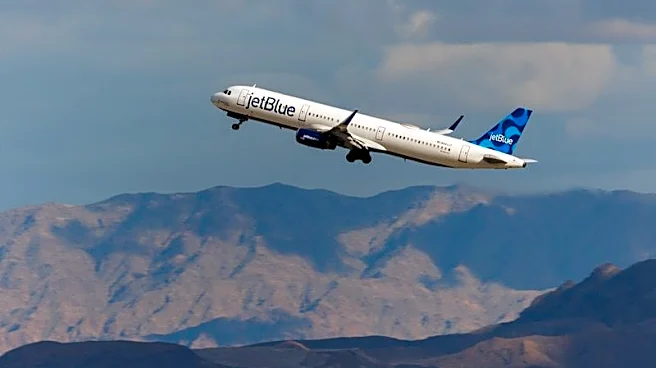
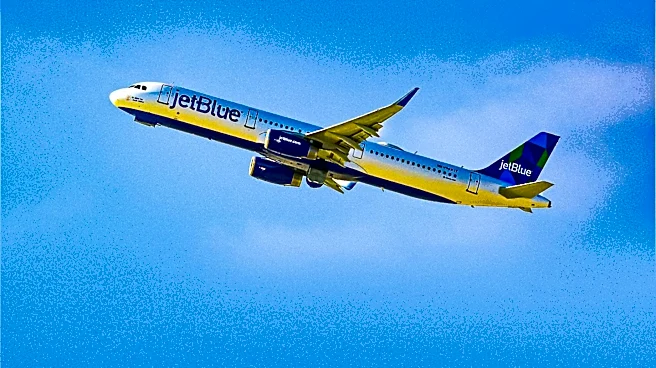
JetBlue Airways Corporation announced its financial results for the third quarter of 2026, revealing an 18.4% growth in Revenue per Available Seat Mile (RASM). The airline successfully recaptured approximately 87% of the higher fuel costs experienced
during the quarter. Joanna Geraghty, JetBlue's chief executive officer, expressed encouragement regarding the progress, citing resilient demand and strong yields that drove revenue beyond initial expectations. The company also highlighted significant growth in Fort Lauderdale, with RASM increasing by nearly 15% on over 65% capacity growth. JetBlue expects this momentum to continue into the fourth quarter, projecting a 1-2 point year-over-year operating margin expansion. The airline's strategic initiatives, including an upgraded revenue management system and growing loyalty engagement, are contributing to its financial performance. JetBlue ended the third quarter with $2.2 billion in liquidity, including an undrawn credit facility, and expanded its unencumbered asset base to approximately $7 billion.
Why It's Important?
JetBlue's third-quarter performance is important for the U.S. airline industry as it demonstrates a carrier's ability to navigate increased fuel costs and achieve revenue growth through strategic operational adjustments and strong demand. The 18.4% RASM growth and the recapture of a significant portion of fuel costs indicate effective revenue management and pricing strategies in a challenging economic environment. The projected operating margin expansion in the fourth quarter, despite higher fuel prices, suggests a positive outlook for the airline's profitability. The focus on expanding operations in Fort Lauderdale, with substantial capacity and RASM growth, highlights a regional shift in market strategy, potentially increasing competition and service options in that area. The improvement in loyalty program engagement and the launch of new premium services like BlueFirst™ could enhance customer retention and attract new segments, contributing to long-term financial stability and market share in the competitive U.S. aviation sector.
What's Next?
JetBlue anticipates further margin expansion in the fourth quarter of 2026, driven by continued revenue strength and a meaningful step-down in unit-cost growth excluding fuel. The airline is focused on achieving sustained operating profitability in 2027 and aims for at least $1 EPS and positive free cash flow in 2028. Commercial initiatives, including enhanced revenue management and expanding travel offerings, are expected to mature and contribute to future growth. JetBlue plans to continue its disciplined capacity deployment and cost execution. The company will hold a conference call on October 27, 2026, to discuss its quarterly earnings, providing further insights into its strategies and outlook. Additionally, the launch of BlueFirst™, JetBlue's new domestic first-class experience, across more than 30 routes, with initial service beginning in December, indicates a push into the premium market segment.
Beyond the Headlines
The reported financial results from JetBlue underscore a broader trend in the U.S. airline industry where carriers are adapting to fluctuating fuel prices and evolving passenger demand. The emphasis on 'resilient demand' and 'strong yields' suggests that despite economic uncertainties, consumers are still willing to pay for air travel, particularly for premium experiences and convenient routes. JetBlue's success in recapturing fuel costs highlights the effectiveness of dynamic pricing and hedging strategies in mitigating external economic pressures. The strategic shift towards strengthening its presence in key hubs like Fort Lauderdale, as evidenced by significant capacity and RASM growth, indicates a focus on optimizing network efficiency and market dominance in specific regions. This could lead to increased competition for other airlines operating in these areas and potentially influence fare structures and service offerings for consumers. The continued investment in loyalty programs and new product offerings like BlueFirst™ also reflects a long-term strategy to build customer loyalty and differentiate the brand in a highly competitive market.