







What's Happening?
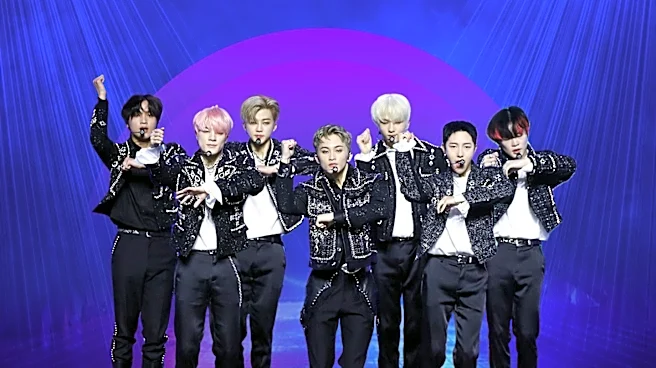
K-pop groups are increasingly utilizing self-produced content, such as variety series and behind-the-scenes footage, as a strategic tool to maintain and expand their global fan bases. This approach has evolved from simple bonus videos to full-fledged
weekly programs comparable to traditional television shows. BTS's "Run BTS," launched in 2015, is cited as a pioneering example, offering fans regular access to the members' personalities and interactions outside of album promotions. This early adoption of online content, including YouTube videos, played a crucial role in the group's global expansion, as noted by a former YouTube Korea marketing executive in a Harvard Business School case study. Other groups like Seventeen, with their series "Going Seventeen," have further developed this format, creating content that attracts viewers beyond their core music fandom.
Why It's Important?
This trend signifies a significant shift in the entertainment industry's branding and fan engagement strategies, particularly impacting the U.S. market where K-pop has a substantial and growing presence. By producing their own content, K-pop groups bypass traditional media gatekeepers, allowing for direct and continuous interaction with fans. This fosters deeper loyalty and provides a more authentic portrayal of artists, which resonates strongly with U.S. audiences seeking genuine connections with celebrities. For U.S. entertainment companies, this model presents both a challenge and an opportunity. It challenges traditional marketing and content distribution methods but also offers a blueprint for building highly engaged, global fan communities through direct-to-consumer content, potentially influencing how U.S. artists and labels approach fan engagement and content creation.
What's Next?
The continued success of self-produced content is likely to drive further investment from K-pop agencies into in-house production teams, focusing on high-quality, distinctive, and sustainable content. This will raise fan expectations for consistency and production value across the industry. Other entertainment sectors, including those in the U.S., may increasingly adopt similar strategies, recognizing the power of direct fan engagement and the creation of new intellectual property. We can expect to see more artists and labels developing their own content ecosystems, blurring the lines between promotional material and standalone entertainment. This could lead to new collaborations between artists and digital platforms, and a greater emphasis on personality-driven content to complement musical releases, further solidifying the artist-fan bond.
Beyond the Headlines
The rise of self-produced content in K-pop highlights a broader cultural shift towards authenticity and direct engagement in the digital age. This phenomenon transcends mere marketing; it creates a unique cultural product that allows fans to feel more connected to artists on a personal level, fostering a sense of community. For the U.S., this trend underscores the evolving nature of celebrity and fandom, where access and perceived authenticity are highly valued. It also raises questions about intellectual property ownership and the monetization of fan engagement in an increasingly fragmented media landscape. The ability of K-pop groups to leverage this strategy to build massive global fan bases, including in the U.S., demonstrates the power of cultural exchange and the universal appeal of compelling storytelling, regardless of language or origin.