



What's Happening?
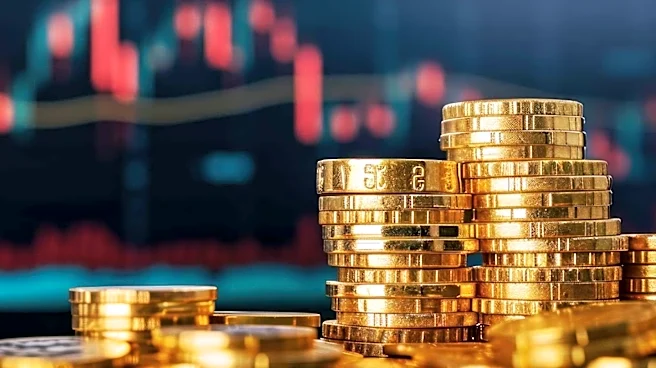
Gold prices have surged to a seven-week high, reaching over $4,360 per ounce, following a surprise drop in US nonfarm payrolls for July. The unexpected decline of 23,000 jobs, against a forecasted gain of 80,000, has significantly reduced the likelihood
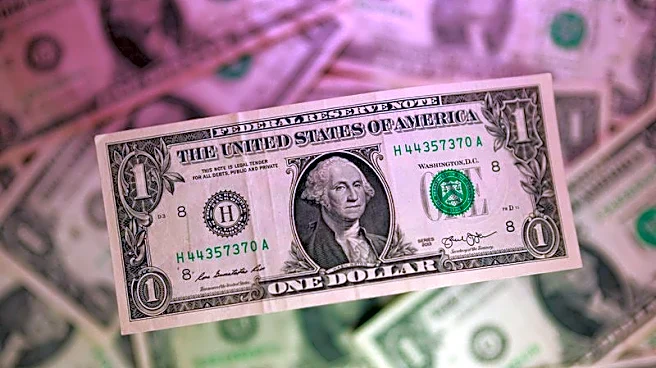
of a Federal Reserve rate hike in September. This has led to a weaker dollar and lower real yields, both of which are supportive of gold prices. The precious metal's price increase marks its best weekly performance since January, driven by shifting market expectations regarding US monetary policy.
Why It's Important?
The rise in gold prices reflects broader market reactions to changing economic data and monetary policy expectations. As a non-yielding asset, gold benefits from lower interest rates, which make it more attractive compared to yield-bearing investments. The reduced likelihood of a rate hike suggests that the Federal Reserve may prioritize economic stability over inflation control, influencing investor behavior and market dynamics. The surge in gold prices also indicates increased demand for safe-haven assets amid economic uncertainty, highlighting the metal's role as a hedge against inflation and currency fluctuations.
What's Next?
Future movements in gold prices will depend on upcoming economic data, particularly inflation and employment reports, which could influence the Federal Reserve's policy decisions. Investors will closely watch these indicators to assess the likelihood of further rate adjustments. The potential for continued dollar weakness and lower real yields could sustain gold's upward momentum. However, any hawkish signals from the Fed or unexpected economic developments could alter this trajectory. The market will remain sensitive to changes in economic conditions and policy expectations.