











What's Happening?
The diamond industry is experiencing a significant shift due to the rise of lab-grown diamonds, which are impacting the natural diamond market. Lab-grown diamonds, which are nearly indistinguishable from natural ones and are sold at lower prices, have
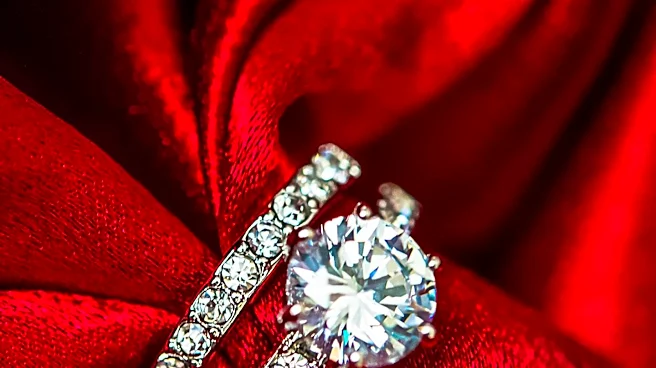
gained popularity, especially during the pandemic. This trend has led to a decline in natural diamond sales, with the market becoming bifurcated. Large natural diamonds remain resilient, while smaller stones face challenges. The Diamond Standard Index, which tracks investment-grade diamond prices, has dropped significantly, indicating a potential long-term change in the market. The preference for lab-grown diamonds is also influenced by ethical considerations and cost-effectiveness, particularly among middle-class consumers purchasing engagement and wedding rings.
Why It's Important?
The shift towards lab-grown diamonds has significant implications for the diamond industry, affecting both producers and retailers. The decline in natural diamond sales could lead to economic challenges for regions dependent on diamond mining and trade. Additionally, the changing consumer preferences reflect broader societal trends, such as declining marriage rates and increased emphasis on sustainability and cost savings. This disruption could lead to a reevaluation of the value and marketing strategies for natural diamonds, potentially impacting luxury goods markets and consumer behavior. The industry's response to these changes will be crucial in determining its future trajectory.
What's Next?
The diamond industry may need to adapt to the growing popularity of lab-grown diamonds by emphasizing the unique qualities and rarity of natural stones. Marketing strategies could focus on the exclusivity and heritage of natural diamonds to differentiate them from lab-grown alternatives. Additionally, the industry might explore new markets or product lines to offset declining sales in traditional segments. Stakeholders, including retailers and miners, will likely monitor consumer trends closely to adjust their offerings and strategies. The potential for a rebound in natural diamond demand remains uncertain, depending on consumer perceptions and economic conditions.
Beyond the Headlines
The rise of lab-grown diamonds raises ethical and environmental questions, as they are often marketed as more sustainable and conflict-free compared to natural diamonds. This perception could influence consumer choices and drive further demand for lab-grown options. The industry may face pressure to improve transparency and sustainability practices to remain competitive. Additionally, the cultural significance of diamonds, particularly in engagement and wedding traditions, may evolve as consumers prioritize different values. The long-term impact on the diamond market could lead to a redefinition of luxury and value in the jewelry industry.