



What's Happening?
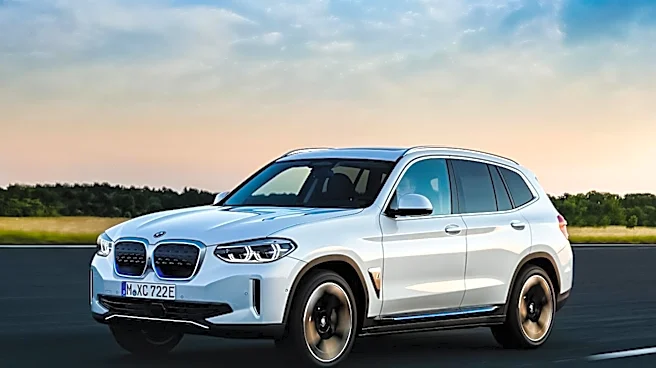
BMW has launched a new, more affordable entry-level version of its iX3 electric SUV, named the iX3 30L, specifically for the Chinese market. This new variant is priced at approximately 34,300 euros (269,900 yuan), making it considerably cheaper than the iX3 models
available elsewhere. The iX3 30L features a single electric motor driving the rear wheels, producing 262 horsepower and 500 Nm of torque, allowing it to accelerate from 0 to 100 km/h in 6.8 seconds. Its top speed is limited to 180 km/h. A key difference is its smaller battery capacity of 77 kWh, compared to the 86.9 kWh of the 40L xDrive and 113.4 kWh of the 50L xDrive models. Despite the smaller battery, it boasts a claimed range of 630 kilometers under the CLTC measurement method, which is known to be more optimistic than the WLTP standard used in Europe.
Why It's Important?
This strategic move by BMW highlights the intense competition and unique market dynamics within China's electric vehicle sector. By offering a significantly cheaper iX3 model, BMW aims to attract Chinese consumers who might otherwise opt for local electric car brands. This approach underscores a broader trend where global automakers adapt their product offerings and pricing strategies to cater to specific regional demands, particularly in high-growth markets like China. For the U.S. market, this development indicates that consumers are unlikely to see similar price reductions or entry-level variants of premium electric vehicles, as the competitive landscape and consumer expectations differ. It also reflects the varying regulatory and testing standards (CLTC vs. WLTP) that influence how vehicle specifications, especially range, are presented across different regions, potentially leading to consumer confusion if not properly understood.
What's Next?
BMW's introduction of the iX3 30L in China is a direct response to the fierce competition from local EV manufacturers. This strategy could influence how other international automakers approach the Chinese market, potentially leading to more localized and cost-effective electric vehicle offerings from premium brands. For BMW, the success of the iX3 30L will be closely monitored to assess its impact on market share and brand perception in China. While there are no immediate plans to bring this specific variant to Europe or the U.S., the insights gained from this market experiment could inform future product development and pricing strategies for global markets, especially as the demand for more affordable electric vehicles grows worldwide. The disparity in pricing and specifications between regions may also prompt discussions about global standardization in EV testing and pricing transparency.
Beyond the Headlines
The decision to launch a distinct, more affordable iX3 model exclusively for China reveals the complex challenges and opportunities global automakers face in the era of electric vehicles. It highlights a strategic pivot towards market-specific product development, moving away from a one-size-fits-all global approach. This could lead to a fragmentation of product lines, where vehicles with the same nameplate might have vastly different specifications and price points depending on the region. Ethically, it raises questions about equitable access to advanced automotive technology and whether consumers in different markets are receiving comparable value. Culturally, it reflects the growing influence of the Chinese automotive market, which is increasingly dictating design, features, and pricing strategies for global brands, potentially shaping the future direction of the entire automotive industry.