
What's Happening?
Carmit and Dori Redlich, owners of Prat Living, have designed their Jaffa home to blend the historical essence of old Jaffa with the modern aesthetics of Tel Aviv, drawing inspiration from the sea. The
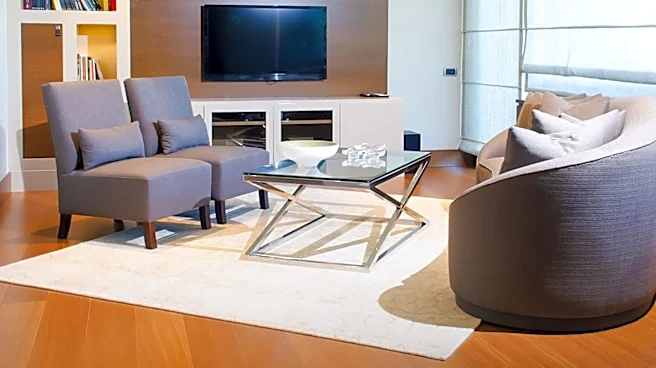
110-square-meter apartment, with an additional 14 square meters of balconies, features a unique design concept developed by Dori Redlich while surfing. Key elements include a wall clad in a cement-based material resembling limestone, reflecting old Jaffa's rough stone buildings, and an opposing storage wall with sliding mirrored doors, symbolizing modern Tel Aviv's lighter architecture. The design also incorporates curved architectural elements inspired by the minaret of a nearby mosque, visible from the apartment's balcony. The couple opted for a two-bedroom layout to create an expansive 50-square-meter central living area for family time and entertaining.
Why It's Important?
This design approach highlights a growing trend in urban living where historical context and modern design are harmoniously integrated, particularly in areas with rich cultural heritage. The Redlichs' decision to move to Jaffa, despite initial reservations following recent events, reflects a broader societal resilience and a desire to embrace diverse urban environments. Their home serves as a case study for how personal spaces can reflect and respond to their surroundings, blending local architectural traditions with global design influences like Scandinavian minimalism. The emphasis on creating a large communal living area also speaks to evolving family dynamics and the importance of shared spaces in contemporary homes, offering insights into lifestyle preferences that prioritize connection and entertainment.
What's Next?
The Redlichs' home, as a showcase for Prat Living, could influence future interior design trends in urban areas that blend historical and modern elements. Their success in creating a 'relaxed, vacation-like atmosphere' in a bustling city like Jaffa might inspire other homeowners and designers to adopt similar approaches, focusing on comfort and a sense of escape within their residences. The integration of custom-made furniture and pieces from their Scandinavian brand demonstrates how personal and professional design philosophies can converge, potentially leading to new product lines or design services that cater to this specific aesthetic. The story also subtly touches upon the ongoing urban development and renewal projects in Jaffa, suggesting continued evolution of its residential landscape.
Beyond the Headlines
The narrative of the Redlichs' move to Jaffa, overcoming initial fears, subtly reflects broader themes of resilience and adaptation in the face of geopolitical events. Their choice to embrace a new environment, despite external pressures, speaks to the human desire for normalcy and the creation of sanctuary within one's home. The design itself, with its deliberate contrasts and symbolic elements, can be seen as a metaphor for cultural coexistence and the blending of diverse influences. The use of materials like limestone and mirrored surfaces, alongside Scandinavian furniture, creates a dialogue between tradition and modernity, suggesting a nuanced approach to identity and belonging in a complex urban setting. This project exemplifies how architecture and interior design can serve as powerful expressions of personal and collective narratives.