






What's Happening?
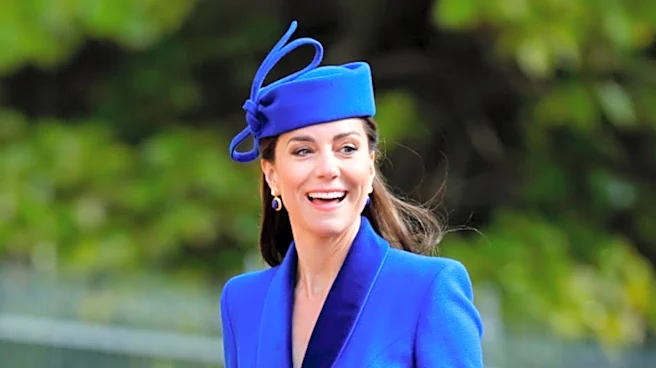
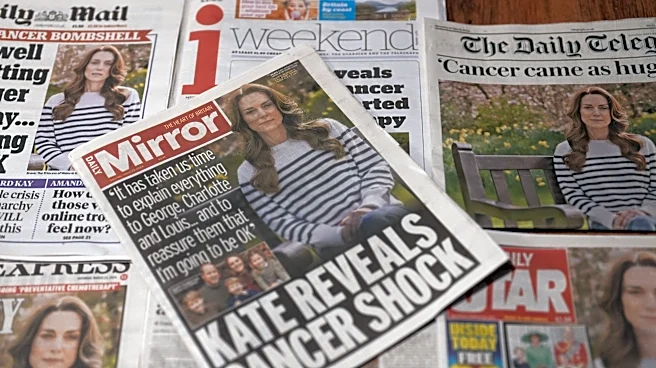
Catherine, Kate Middleton, the Princess of Wales, has openly discussed her personal journey with cancer, emphasizing that recovery extends beyond medical treatment. In March 2024, she announced her cancer diagnosis following abdominal surgery and began
preventative chemotherapy, requesting privacy for her family. She completed chemotherapy in September 2024 and, by January 2025, confirmed she was in remission. However, she highlighted that adjusting to a 'new normal' takes time and that recovery is often a 'rollercoaster.' During a July 2025 visit to Colchester Hospital, she spoke about the pressure to maintain a brave face during treatment and the challenges that arise once medical appointments cease. Her reflections underscore that remission is a medical milestone, but it does not erase the emotional impact of serious illness or guarantee an immediate return to one's previous state. She also credited Prince William as a significant source of support and acknowledged the broader impact of cancer on families, friends, and caregivers.
Why It's Important?
The Princess of Wales's candid sharing of her cancer experience holds significant importance, particularly in destigmatizing illness and promoting a more realistic understanding of recovery. Her public role often demands composure, making her acknowledgment of vulnerability particularly impactful. This transparency can resonate with countless individuals and families in the U.S. and globally who are navigating similar health challenges, offering a sense of shared experience and reducing feelings of isolation. By highlighting that healing is not simply about returning to pre-illness life but about adapting to a 'new normal,' she challenges societal expectations for a quick and complete recovery. This perspective can influence public discourse around chronic illness and recovery, encouraging greater empathy and support for those undergoing long-term health journeys. Her emphasis on the emotional and familial aspects of cancer also underscores the need for comprehensive support systems that extend beyond purely medical interventions.
What's Next?
While the Princess of Wales has not outlined specific future plans related to her health journey, her continued public reflections are likely to shape ongoing conversations about cancer recovery and mental well-being. Her experience may inspire further initiatives or advocacy for more holistic patient support, including psychological and emotional care, both during and after treatment. Her willingness to discuss the 'new normal' could encourage healthcare providers and support organizations to emphasize long-term adjustment and quality of life for cancer survivors. Furthermore, her story may prompt other public figures to share their health challenges, potentially fostering a more open and understanding environment around illness. The focus on family support and the broader impact on caregivers could also lead to increased attention on resources for those supporting loved ones through serious health conditions.
Beyond the Headlines
The Princess of Wales's narrative extends beyond a personal health update; it delves into profound ethical and cultural dimensions of illness and public life. Her decision to share her vulnerability, despite her prominent public role, challenges the traditional expectation of stoicism often associated with royalty and public figures. This act can be seen as a powerful statement on authenticity and the human experience, regardless of status. Culturally, her emphasis on finding a 'new normal' rather than a complete return to the past subtly redefines societal perceptions of strength and resilience. It suggests that true strength lies not in an immediate bounce-back, but in adaptation and self-acceptance. Legally and ethically, her initial request for privacy and the subsequent public announcement highlight the delicate balance between a public figure's right to personal space and the public's interest, particularly when health is involved. Her story also implicitly raises questions about the pressures placed on individuals in the public eye to maintain an image of perfection, even in the face of profound personal challenges.