





What's Happening?
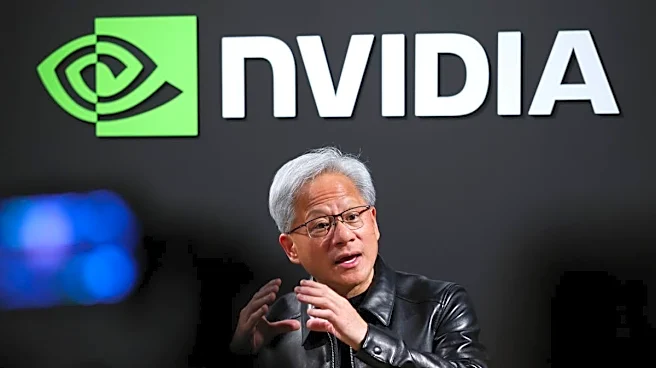
The current rally in the stock market, particularly the S&P 500, is being disproportionately driven by semiconductor chipmakers benefiting from the artificial intelligence (AI) boom, while many traditional Big Tech stocks are experiencing a slump. Nvidia's
recent strong earnings, which saw a 9% climb in shares, have propelled other chipmakers and the overall market higher. The tech-heavy Nasdaq was up 1.57% and the S&P 500 rose 0.82% in midday trading. Semiconductor companies like Intel and Micron Technology are surging, with Micron up 220% over the past year and surpassing $1 trillion in market value. In contrast, Big Tech giants such as Microsoft and Meta have seen their shares drop in the last year as they invest billions into AI infrastructure. Alphabet and Amazon shares are also down from recent peaks, and Apple is treading water, down almost 7% from its record high earlier this month.
Why It's Important?
This concentrated market rally, heavily reliant on a few semiconductor stocks, presents significant risks to the broader economy and investor portfolios. Chip stocks now account for 37% of the S&P 500's market value gains this year and nearly a third of the index's total market value, according to Stifel. This level of concentration echoes the dot-com bubble of the late 1990s, where a narrow set of companies drove market performance. If these leading semiconductor firms begin to struggle, the entire stock market could face substantial trouble, as warned by James Reilly, senior markets economist at Capital Economics. The divergence between the soaring chip sector and the declining broader tech sector indicates a potential fragility in the market, where investor expectations for earnings are extremely high, leaving little room for disappointment and increasing volatility.
What's Next?
Investors will need to closely monitor the performance of semiconductor stocks and the broader tech sector for any signs of a shift in sentiment. The market's sensitivity to chipmakers' earnings was evident when Broadcom's slight miss on third-quarter chip revenue forecasts led to a nearly 20% drop in its shares over two days. This suggests that any indication of slowing AI spending by Big Tech companies could negatively impact chipmakers' future profits and trigger a wider market correction. Analysts like Thomas Carroll of Stifel, while remaining invested in these stocks, are keeping a close eye on these developments. The sustainability of the AI rally will depend on continued robust earnings from chipmakers and whether the investments made by Big Tech in AI infrastructure eventually translate into significant revenue growth, justifying their current valuations.
Beyond the Headlines
The current market dynamics highlight a deeper structural shift in the technology landscape, where the foundational hardware providers for AI are becoming the new titans, potentially at the expense of the software and platform giants that dominated the previous era. This reordering of market leadership could lead to increased competition and innovation in the semiconductor industry, as companies vie to provide the most efficient and powerful chips for AI development. However, it also raises concerns about market monopolies and the potential for a few companies to exert outsized influence over technological progress and economic growth. The reliance on AI as the primary growth driver for the market also underscores the speculative nature of current valuations, prompting questions about whether the underlying economic fundamentals can support such rapid expansion without creating an unsustainable bubble.