








What's Happening?
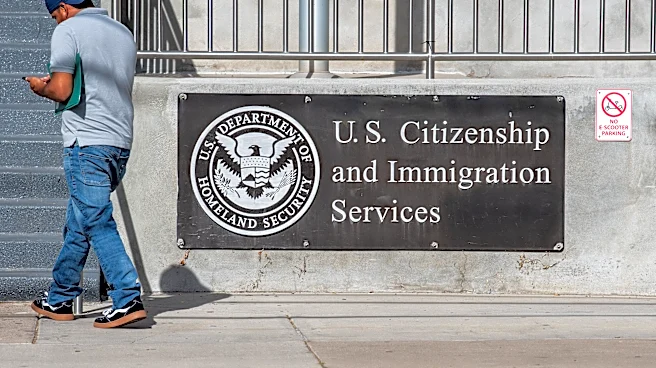
The U.S. Citizenship and Immigration Services (USCIS) has provided a clear definition for what constitutes a 'rural area' within the context of the EB-5 immigrant investor program. According to the definition, a rural area is located outside a metropolitan
statistical area and outside any city or town with a population of 20,000 or more. This definition is crucial for the EB-5 program because it determines eligibility for a lower investment threshold. The EB-5 program, which is the employment-based fifth-preference immigrant visa category, is administered by USCIS and allows foreign investors to obtain a green card by investing capital into a U.S. commercial enterprise that creates jobs. A specific share of EB-5 visas is reserved annually for investments in rural areas, high-unemployment areas, and infrastructure projects, with 20 percent allocated for rural investments.
Why It's Important?
This precise definition of 'rural area' is significant for both potential EB-5 investors and the development of rural economies in the United States. By clearly delineating what qualifies as a rural area, USCIS provides certainty for investors seeking to benefit from the lower investment threshold associated with these regions. This clarity can encourage more foreign capital to flow into underserved rural communities, potentially stimulating job creation and economic growth in areas that often face challenges in attracting investment. For rural communities, increased EB-5 investment can lead to the development of new businesses, infrastructure improvements, and a boost in local employment, thereby addressing economic disparities between urban and rural regions. The program aims to ensure that invested capital is genuinely exposed to the business, with no assurance of return, and requires investors to prove the lawful origin of their funds.
What's Next?
With the clarified definition of 'rural area,' potential EB-5 investors and regional centers will have a more straightforward path to identifying eligible projects. This could lead to an increase in applications for EB-5 visas targeting rural investments, as the lower investment threshold makes these opportunities more accessible. The USCIS will continue to administer the EB-5 program, processing Form I-526 for direct investors and Form I-526E for regional center investors, followed by Form I-829 to remove conditions on residence based on evidence of investment and job creation. The ongoing allocation of 20 percent of EB-5 visas to rural investments is expected to continue driving economic development in these designated areas.
Beyond the Headlines
The emphasis on rural areas within the EB-5 program highlights a broader policy objective to address regional economic imbalances across the U.S. By incentivizing investment in these regions, the program not only aims to create jobs but also to foster a more equitable distribution of economic opportunities. This approach can help mitigate issues such as population decline, limited access to services, and lack of infrastructure that often plague rural communities. The program's requirement for 'at-risk' capital and documented 'source of funds' also underscores the legal and ethical considerations involved, ensuring that investments are legitimate and contribute meaningfully to the U.S. economy rather than serving solely as a means to obtain residency.