



What's Happening?
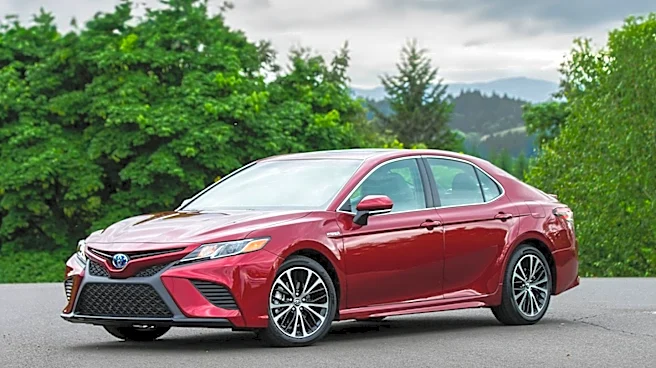
Toyota is importing U.S.-made Camry vehicles to Japan, a strategic move aimed at improving the trade balance and addressing ongoing tariff issues. This decision comes despite Toyota already manufacturing Camrys in Japan for export to other Asia-Pacific
markets. Akio Toyoda, Chairman of Toyota, stated in June 2026 that while the Camry has passionate fans in Japan, it was not being produced for the domestic market. The U.S.-built Camrys, specifically from Kentucky, will be re-introduced to the Japanese market after a period of absence. These imported vehicles will be adapted to Japanese regulations, including right-hand drive configurations and Japanese-set infotainment systems. The cars will be marketed in Japan with the tagline 'Made in US, Made by TOYOTA' and priced competitively, ranging from approximately $27,000 to $32,500, which is slightly less than the 2027 Camry's U.S. price of $30,000. This initiative follows a 2025 bilateral trade deal allowing U.S.-certified passenger vehicles to be sold in Japan without additional testing.
Why It's Important?
This move by Toyota carries significant implications for U.S. trade relations and the automotive industry. By importing U.S.-made vehicles, Toyota is directly contributing to improving the trade balance between the two nations, potentially mitigating future tariff disputes. Chairman Toyoda has consistently advocated for solutions that benefit all stakeholders regarding international tariffs, and this action aligns with that philosophy. For the U.S. automotive manufacturing sector, it signifies a boost in production and exports, supporting American jobs and economic activity in states like Kentucky. It also highlights the global interconnectedness of the auto industry, where strategic decisions by major manufacturers can influence international trade policies. The initiative demonstrates a proactive approach to navigating complex trade environments, potentially setting a precedent for other multinational corporations facing similar challenges. Furthermore, it underscores the perceived quality and appeal of U.S.-made vehicles in international markets, challenging conventional notions about manufacturing costs and logistics.
What's Next?
The success of this initiative will likely be closely monitored by trade officials and automotive industry leaders in both the U.S. and Japan. If the imported U.S.-made Camrys perform well in the Japanese market, it could encourage Toyota to expand similar programs or inspire other automakers to consider comparable strategies to address trade imbalances. The impact on ongoing tariff discussions will be a key indicator of the program's effectiveness. Stakeholders, including U.S. trade representatives and Japanese government officials, will be observing whether this move leads to a 'slight reconsideration of the ongoing tariff issues,' as suggested by Akio Toyoda. Additionally, the long-term sales performance of the U.S.-built Camry in Japan will determine the sustainability of this import strategy. The initiative could also influence consumer perceptions in Japan regarding foreign-made vehicles, potentially opening doors for more U.S. exports in the future.
Beyond the Headlines
Beyond the immediate economic and trade implications, Toyota's decision touches upon deeper cultural and ethical considerations within the global automotive industry. The company's willingness to import vehicles from the U.S., despite having the capacity to produce them domestically, reflects a commitment to fostering international cooperation and mitigating protectionist sentiments. This approach, as described by Chairman Toyoda, aims to create a 'win-win' scenario for all stakeholders, moving beyond traditional negotiating tactics. It also highlights the evolving nature of global supply chains and manufacturing strategies, where political and economic considerations can sometimes outweigh purely logistical or cost-efficiency factors. The marketing of these vehicles with a 'Made in US' tagline in Japan could also subtly influence national pride and consumer preferences, potentially shifting perceptions about the origin of goods in a globalized market. This strategic move could serve as a case study for how multinational corporations can proactively address geopolitical tensions through innovative business practices.