







What's Happening?
AI backyard design tools are emerging as a resource for homeowners looking to visualize outdoor living spaces. These tools allow users to upload a photo of their existing backyard and then apply various design elements through written prompts. For effective
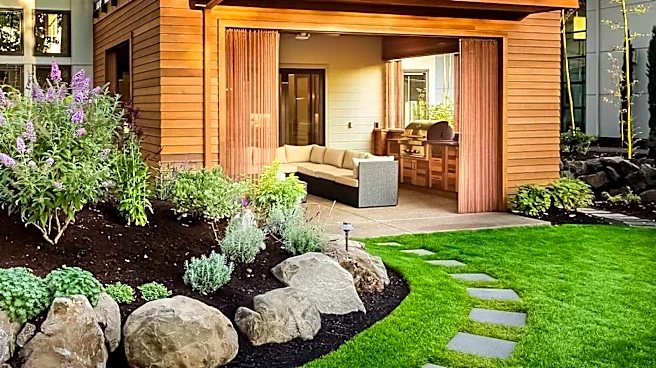
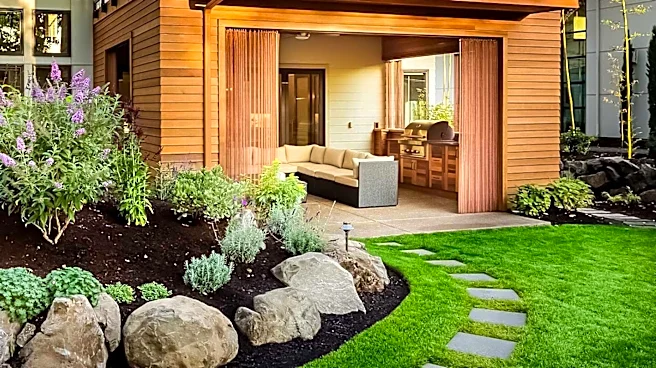
results, users are advised to start with a real photo of their yard, including existing features like patios, fences, and trees. Specificity in prompts is crucial; generic requests like 'make my backyard nicer' yield generic renders, while detailed descriptions such as 'a covered patio with a cedar-beam roof, ceiling fan, and stone-look flooring' produce more tailored outcomes. The process often requires multiple iterations, as AI may initially generate cluttered designs or omit desired features. Users should treat the interaction as a conversation, comparing versions and re-uploading photos if designs deviate from expectations.
Why It's Important?
The increasing sophistication of AI design tools has significant implications for the landscaping and home improvement industries. For homeowners, these tools democratize access to design visualization, allowing them to experiment with ideas before committing to professional services. This can lead to more informed decisions and potentially reduce design costs. However, the limitations of AI, such as its inability to account for local building codes, HOA rules, site-specific conditions like soil compaction or drainage, and Texas weather considerations, highlight the continued necessity of professional landscape designers and contractors. While AI can inspire, it cannot replace the practical expertise required for structural integrity, proper drainage, and material suitability, especially in diverse climates. This technology could shift the initial phase of design consultation, with homeowners arriving with more concrete ideas generated by AI.
What's Next?
As AI backyard design tools evolve, future developments may include better integration of local environmental factors, building codes, and material availability. Homeowners will likely continue to use these tools for initial inspiration, bringing their AI-generated concepts to professional designers for refinement and feasibility assessment. Landscape design firms may integrate AI tools into their preliminary client consultations to quickly understand client preferences and generate initial concepts. The industry will need to adapt to clients who arrive with detailed AI renders, requiring designers to effectively translate these virtual ideas into buildable, compliant, and sustainable plans. Training for both homeowners and professionals on how to best utilize and interpret AI-generated designs will become increasingly important.
Beyond the Headlines
The rise of AI in design raises broader questions about the intersection of technology and creative fields. While AI can generate aesthetically pleasing images, it lacks the nuanced understanding of human experience, environmental context, and practical constraints that a human designer brings. This technology could lead to a greater appreciation for the human element in design—the ability to problem-solve, innovate within limitations, and create spaces that are not only beautiful but also functional and sustainable. There's also an ethical dimension concerning the potential for AI to create designs that are visually appealing but environmentally irresponsible or structurally unsound, underscoring the need for human oversight and expertise in the final execution of any project.