



What's Happening?
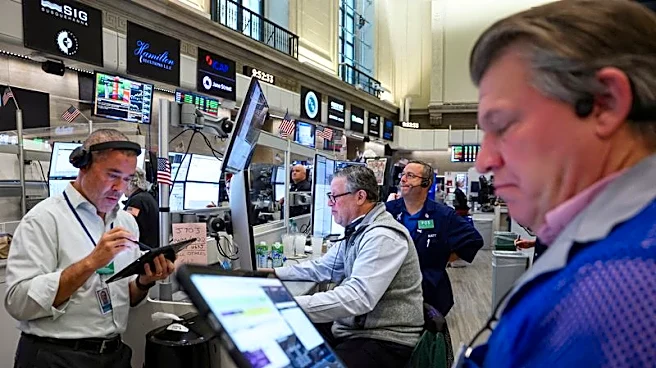
Michael Burry, known for predicting the mid-2000s housing bubble collapse, has issued a warning to investors regarding AI infrastructure stocks, specifically naming Nvidia, CoreWeave, and Nebius. Following a recent slump in these stocks and the broader
microchip sector, Burry stated on X that he had 'tried to warn' investors, providing information that would have prompted selling. Nvidia shares opened approximately 4% lower, while CoreWeave and Nebius experienced drops of around 7%. These companies have seen significant declines from their October 6 intraday highs, with CoreWeave, Nebius, and Nvidia down about 42%, 55%, and 65% respectively. The NYSE Semiconductor Index has also fallen by approximately 30% during the same period. Burry's skepticism extends beyond recent market fluctuations, as he has been vocal about his concerns regarding AI stocks for the past year, highlighting issues such as overinvestment in depreciating assets, aggressive accounting, circular-financing deals, and dangerous levels of debt.
Why It's Important?
Burry's warnings are significant due to his track record of accurately forecasting major market downturns. His current skepticism about AI infrastructure stocks suggests a potential overvaluation and underlying financial vulnerabilities within the sector. The decline in shares of major players like Nvidia, CoreWeave, and Nebius, coupled with the broader slump in the semiconductor index, indicates a possible shift in investor sentiment and a re-evaluation of the AI market's sustainability. If Burry's concerns about overinvestment, aggressive accounting, and high debt levels prove accurate, it could lead to further market corrections and financial instability for companies heavily invested in AI infrastructure. This situation could impact a wide range of stakeholders, from individual investors holding AI stocks to larger institutional funds and the broader technology sector, potentially affecting innovation and growth in the AI space if capital becomes scarcer or more expensive.
What's Next?
The immediate future will likely see continued scrutiny of AI infrastructure companies' financial health and business models. Investors will be closely watching for further market movements and any official responses from Nvidia, CoreWeave, Nebius, or other companies in the sector regarding Burry's criticisms. The potential for a 'less AI-friendly environment' with Democrats in charge of the House and Senate, as mentioned by Burry, could also influence policy decisions and funding for AI initiatives, adding another layer of uncertainty. Companies may need to address concerns about their debt levels, accounting practices, and asset depreciation to regain investor confidence. The ongoing debate over the fundamental value versus speculative growth in the AI sector is expected to intensify, potentially leading to increased volatility and a more cautious investment landscape for AI-related ventures.
Beyond the Headlines
Burry's critique extends beyond mere stock performance, delving into the fundamental financial practices of AI companies. His concerns about 'aggressive accounting, circular-financing deals, and dangerous levels of debt and off-balance-sheet liabilities' highlight potential systemic risks within the rapidly expanding AI industry. This raises broader questions about the transparency and sustainability of growth models in emerging technological sectors. The comparison to the mid-2000s housing bubble, which Burry famously predicted, suggests a deeper concern about speculative bubbles fueled by easy capital and potentially unsustainable business practices. If these issues are widespread, they could lead to a significant re-evaluation of how technology companies are valued and financed, potentially triggering regulatory scrutiny and a shift towards more conservative investment strategies in high-growth sectors. The ethical implications of potentially misleading financial reporting or excessive risk-taking in pursuit of rapid expansion could also come under greater public and regulatory examination.