







What's Happening?
Logistics giant UPS has announced an investment exceeding $2 billion, spanning from 2024 through 2028, to bolster supply chain flexibility and resilience across its International, Healthcare, and Supply Chain Solutions businesses. These targeted investments
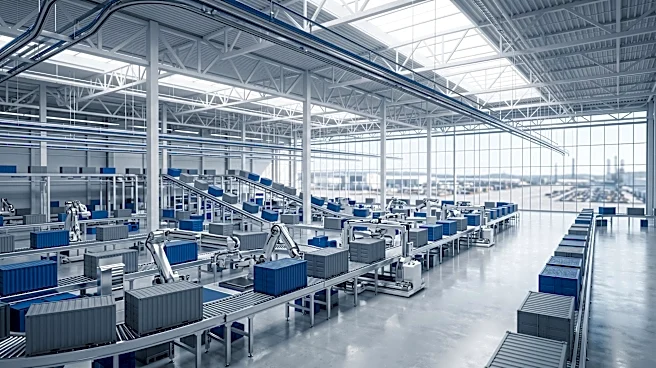
aim to increase speed, reliability, and control for customers in high-growth sectors such as healthcare, technology, industrial manufacturing, and automotive. Key initiatives include the construction of 27 temperature-controlled freight cross-dock facilities, optimized for rapid transfers between air and ground movements. In Asia, UPS has invested in a tech-enabled logistics center in Taiwan and expanded its Incheon Airport hub in South Korea, both featuring advanced automation. In North America, UPS has invested nearly $50 million in network capabilities and dedicated industry teams, expanding its North American Air Freight (NAAF) services to include time-definite heavy air freight to and from Mexico, and enhancing its road transport network.
Why It's Important?
This substantial investment by UPS is critical for U.S. businesses, particularly those in high-growth sectors, as it directly addresses the need for more resilient and efficient supply chains. The enhancements in speed, reliability, and control are vital for industries like automotive and healthcare, where timely delivery of components and critical products can prevent costly production shutdowns or ensure patient care continuity. The expansion of services, especially in North America with improved air freight options to Mexico, supports nearshoring trends and strengthens regional supply networks, reducing dependence on distant and potentially volatile global routes. For U.S. manufacturers and healthcare providers, these improvements mean greater predictability, reduced lead times, and enhanced ability to navigate trade shifts and supply chain uncertainties, ultimately contributing to competitive advantage and operational stability.
What's Next?
UPS will continue to roll out its multi-year investment plan through 2028, with further enhancements expected in its global network and specialized services. This will likely include additional infrastructure development, technology integration, and the expansion of dedicated expert teams for specific industries. Businesses in the automotive, healthcare, technology, and industrial manufacturing sectors can anticipate improved logistics solutions, offering greater flexibility and connectivity. The focus on automation and temperature-controlled facilities suggests a trend towards more sophisticated and specialized logistics capabilities. Customers should expect continued efforts from UPS to provide end-to-end control and reduced complexity in their supply chains, with an emphasis on reliability and speed to meet evolving market demands and mitigate future disruptions.
Beyond the Headlines
UPS's significant investment reflects a broader industry-wide recognition that supply chain resilience is no longer a luxury but a fundamental requirement for modern commerce. This strategic pivot indicates a move away from purely cost-driven logistics models towards a more value-centric approach that prioritizes reliability and adaptability. The emphasis on specialized services, such as temperature-controlled facilities and time-definite heavy air freight, highlights the increasing complexity and sensitivity of goods being transported globally. This could lead to a redefinition of logistics partnerships, with companies seeking providers who can offer tailored, high-assurance solutions. Furthermore, the investment in automation and technology suggests a future where logistics operations are highly digitized and data-driven, potentially setting new industry standards for efficiency, transparency, and risk management, and influencing how businesses design their entire operational footprint.