






What's Happening?
Tyson Foods is partnering with Malayan Flour Mills Bhd (MFM) to introduce a new generation of climate-controlled poultry farms in Perak, Malaysia. This collaboration is part of MFM's broader strategy to double its poultry processing capacity and expand
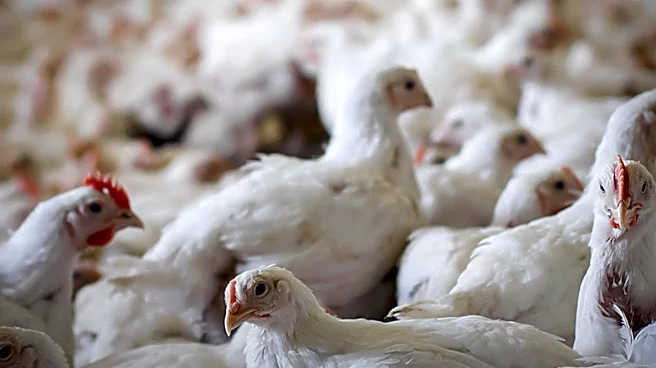
into new food segments, aiming to strengthen Malaysia’s domestic food supply and develop a more competitive regional food business. The proposed closed-house facilities are designed to accommodate up to 52,000 broilers each, significantly more than the 20,000 birds typically housed in conventional open-house farms. This shift towards climate-controlled farming is deemed crucial due to the increasing impact of extreme weather conditions on poultry growth rates, productivity, and consistency. MFM's executive deputy chairman cum managing director, Teh Wee Chye, highlighted that this technology allows for precise monitoring of environmental factors like temperature and humidity, and can even predict bird weight and uniformity before harvest. This initiative underscores Tyson Foods' involvement in international agricultural advancements and MFM's commitment to modernizing its operations.
Why It's Important?
This collaboration is significant for several reasons. For Tyson Foods, it represents an expansion of its global influence and a strategic partnership in a growing market. By contributing to advanced farming techniques in Malaysia, Tyson Foods reinforces its position as a leader in agricultural innovation and sustainable practices. For Malaysia, this initiative is a critical step towards enhancing food security and reducing reliance on food imports, which currently amount to approximately RM72 billion annually. The adoption of climate-controlled farms will lead to more efficient and consistent poultry production, mitigating risks associated with climate variability. This modernization also supports MFM's goal of increasing its processing capacity from 200,000 to 400,000 birds daily, creating a more robust and resilient domestic food supply chain. The move also signals a broader trend in the global food industry towards precision agriculture and technological integration to meet growing demand and environmental challenges.
What's Next?
The immediate next steps involve the establishment and operationalization of these new climate-controlled poultry farms in Perak. MFM is also planning further expansions, including adding 60,000 tonnes of silo and storage capacity to its integrated food complex, with a target of reaching 208,000 tonnes by 2028. This increased storage will support higher production volumes and enable bulk procurement of raw materials. Additionally, MFM is developing a new ready-to-eat (RTE) and further-processing plant in Manjung, Perak, expected to be ready by 2028, indicating a move towards value-added products. The success of these climate-controlled farms could serve as a model for future agricultural developments in the region, potentially influencing other producers to adopt similar advanced farming techniques. The partnership may also lead to further collaborations between Tyson Foods and MFM in other areas of food production and processing.
Beyond the Headlines
Beyond the immediate operational benefits, this development highlights a broader global trend in agriculture: the increasing necessity of climate resilience and technological integration in food production. As climate change intensifies, traditional farming methods become more vulnerable, making controlled environments essential for consistent output. This partnership also reflects the growing importance of international collaborations in addressing food security challenges, particularly in developing economies. The focus on precision farming, where technology provides real-time data for optimal conditions, signifies a shift towards more data-driven and efficient agricultural practices. Furthermore, MFM's expansion into ready-to-eat products caters to evolving consumer lifestyles, particularly among millennials who seek convenience, indicating a strategic adaptation to changing market demands in the food industry. This initiative could also set new standards for animal welfare and environmental sustainability in poultry farming within the region.