







What's Happening?
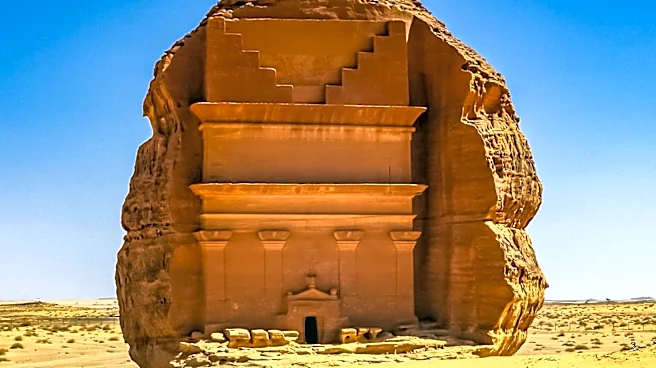
AlUla is enhancing its tourism offerings with new heritage day tours that provide access to significant archaeological sites. These tours, available daily, include visits to Hegra, Dadan, and Jabal Ikmah. Hegra, Saudi Arabia's first UNESCO World Heritage
Site, features impressive Nabataean tombs carved into sandstone mountains. Dadan is recognized as the ancient capital of the Lihyanite Kingdom, while Jabal Ikmah is known for its extensive rock inscriptions, often referred to as AlUla's open library. The tours, which typically last about eight hours, include expert local guides, entry to all three sites, hotel pickup and drop-off, and private transportation. After exploring the heritage sites, visitors can also experience the oasis trail, AlJadidah Arts District, and AlUla Old Town, concluding with a sunset view at Elephant Rock. These initiatives aim to showcase AlUla's rich historical and cultural landscape to a broader audience.
Why It's Important?
The expansion of archaeological tourism in AlUla is significant for several reasons. It positions AlUla as a premier destination for cultural heritage, attracting international visitors and boosting the local economy through tourism. By highlighting UNESCO World Heritage sites and ancient kingdoms, AlUla contributes to the global understanding and preservation of historical civilizations. The structured tours, complete with expert guides and comprehensive itineraries, ensure that visitors gain a deep appreciation for the historical context and significance of these sites. This development also supports local employment in the tourism sector, from guides and transportation services to hospitality. Furthermore, promoting these sites helps to raise awareness about the importance of archaeological conservation and responsible tourism practices, ensuring these invaluable historical assets are protected for future generations.
What's Next?
Future developments for AlUla's archaeological tourism are likely to focus on further enhancing visitor experiences and expanding accessibility. This could include the introduction of more specialized tours, such as those focusing on specific historical periods or archaeological techniques. There may also be efforts to integrate advanced digital tools, like augmented reality or interactive exhibits, to provide deeper insights into the ancient civilizations that once thrived in the region. Continued investment in infrastructure, including visitor centers and accommodation, will be crucial to support the growing influx of tourists. Additionally, collaborations with international archaeological institutions could lead to new discoveries and research, further enriching AlUla's historical narrative and attracting academic interest. The ongoing promotion of AlUla as a cultural destination will likely involve global marketing campaigns and partnerships with travel agencies to reach a wider international audience.
Beyond the Headlines
Beyond the immediate economic and tourism benefits, the emphasis on AlUla's archaeological heritage carries deeper cultural and educational implications. It fosters a greater appreciation for the region's pre-Islamic history, challenging common narratives and highlighting the diverse cultural tapestry of the Arabian Peninsula. The preservation and presentation of sites like Hegra and Dadan contribute to a broader understanding of human civilization and its development in arid environments. Ethically, the development of these sites for tourism must balance accessibility with conservation, ensuring that increased visitor numbers do not inadvertently damage fragile historical structures. Legally, the protection of these sites falls under international heritage laws, requiring careful management and adherence to UNESCO guidelines. Culturally, these tours offer a unique opportunity for visitors to connect with ancient traditions and artistic expressions, fostering cross-cultural understanding and respect for historical legacies.