


What's Happening?
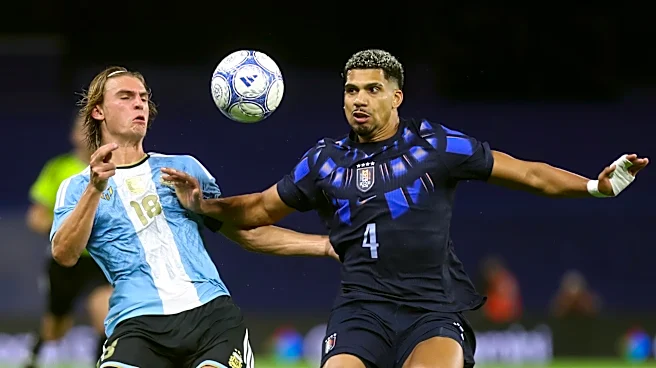
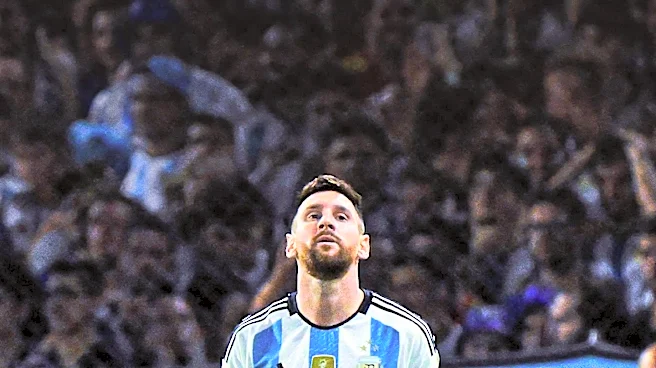
Lionel Messi's retirement from the Argentina national team has significantly impacted ticket sales and stadium attendance for subsequent matches. Argentina's first friendly match against Uruguay after Messi's retirement, held at La Bombonera in Buenos
Aires, saw unusually low demand for tickets, leading to the closure of several sections of the stadium. Some sections were not even opened for sale, and fans who had purchased tickets were relocated, resulting in visible gaps in the stands. This contrasts sharply with Messi's farewell match on October 6, 2026, against Benin, where over 85,000 fans filled the Monumental stadium in what was described as a national celebration. The low attendance for the Uruguay match, which ended in a 2-1 loss for Argentina, was not attributed to FIFA sanctions for discriminatory chants, as those penalties had either been served or suspended. Midfielder Alexis Mac Allister acknowledged the effect of Messi's absence, stating that it's 'normal for these things to happen when Leo is no longer here, because in the end he’s the best in the world and there were people who came to see him.'
Why It's Important?
The decline in ticket sales and stadium attendance following Lionel Messi's retirement from the Argentina national team highlights the immense commercial and emotional value a single superstar can hold for a sports franchise or national team. For U.S. sports, this situation underscores the potential impact of star player departures on fan engagement and revenue, particularly in leagues that rely heavily on individual celebrity to draw crowds. The phenomenon demonstrates that while team performance is crucial, the presence of an iconic figure can significantly boost interest, even for friendly matches. This could influence how U.S. sports organizations manage player transitions and cultivate new fan bases in a post-superstar era. The challenge for the Argentine national team, and by extension, any team losing a generational talent, is to build a new identity and achieve success that can independently attract and retain fans, moving beyond the 'curiosity' factor that a superstar provides.
What's Next?
The Argentine national team faces the challenge of rebuilding fan engagement and maintaining interest in the post-Messi era. Coach Lionel Scaloni's team will need to focus on consistent performance and developing a strong team identity to attract fans back to the stadiums. The team's ability to win matches and play compelling soccer will be crucial in turning the 'post-Messi curiosity' into sustained support. This situation could prompt national football federations and clubs to re-evaluate their long-term marketing and fan engagement strategies, emphasizing collective team achievements and the development of new stars rather than solely relying on one individual. The upcoming matches will serve as a test of the team's resilience and its capacity to forge a new connection with its fan base.
Beyond the Headlines
Beyond the immediate impact on ticket sales, Messi's retirement from international football signals a broader shift in the landscape of global soccer. It marks the end of an era dominated by one of the sport's most iconic figures, prompting a re-evaluation of how national teams maintain their allure in the absence of such transcendent talent. This situation could lead to a more distributed star power across teams, potentially fostering more competitive and unpredictable international tournaments. Ethically, it raises questions about the over-reliance on individual athletes for a sport's popularity and the pressure placed on these figures. Culturally, it reflects the deep emotional connection fans have with their national heroes, and the void left when those heroes step away. The challenge for Argentina, and for football globally, is to ensure that the sport's intrinsic appeal and the collective spirit of the team can continue to captivate audiences, even without the singular magic of a player like Messi.