






What's Happening?
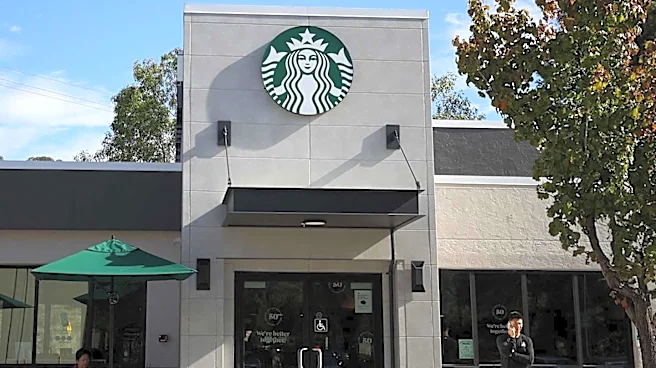
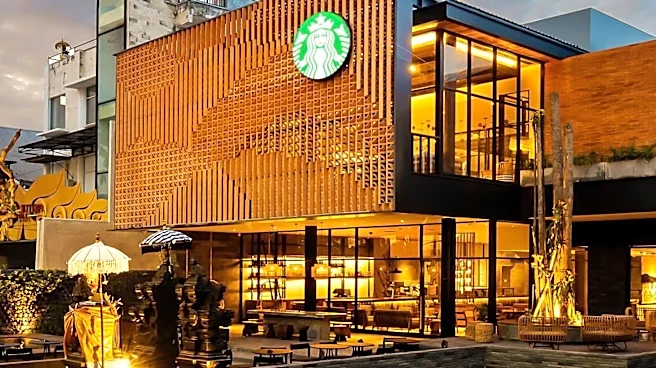
Starbucks has launched a new, smaller cafe prototype, with six locations already open in cities like San Antonio and Manhattan. This initiative aims to re-establish Starbucks as a destination for customers to sit and enjoy coffee, despite the reduced
footprint. The new design incorporates features of a typical Starbucks, including plush seating, bakery displays, and an espresso bar, but in a fraction of the usual size. The counter has been redesigned with a 'folded bar' configuration to fit into narrower spaces, allowing the company to expand into areas with high real estate costs. This move is part of a broader strategy to revitalize the 'third place' energy, a priority for CEO Brian Niccol, following past missteps where the company removed comfortable seating and focused heavily on mobile order pickups.
Why It's Important?
This strategic shift by Starbucks is significant for the U.S. retail and food service industries. By focusing on smaller, yet fully functional, cafe prototypes, Starbucks can penetrate dense urban markets where larger spaces are cost-prohibitive. This approach could lead to increased market saturation and accessibility for the brand. The emphasis on bringing back comfortable seating and encouraging in-store lingering signals a potential reversal of the trend towards purely transactional, grab-and-go models that many fast-casual establishments adopted. If successful, this could influence other chains to reconsider their store formats and prioritize the customer experience over pure efficiency. For consumers, it means more options for a traditional coffee shop experience, potentially enhancing local community hubs. The company's mixed success in attracting customers back, including closing hundreds of locations in North America, underscores the importance of this new design in driving future growth and profitability, especially as it plans to open approximately 5,000 new locations.
What's Next?
Starbucks plans to accelerate the rollout of these smaller prototypes, integrating lessons learned from the 1,000 existing locations that have already been remodeled as part of a $1 billion restructuring effort. The company will continue to gather feedback from both customers and employees to refine the new design. This expansion will likely focus on urban centers and other areas where real estate is at a premium. The success of these smaller cafes will be crucial in determining Starbucks' future growth trajectory and its ability to balance convenience with the desired in-store experience. The company's ability to maintain its 'third place' identity while adapting to smaller spaces will be a key factor to watch, especially as it aims to cater to diverse customer needs, including in-person ordering, delivery, app orders, and drive-thru options.
Beyond the Headlines
The introduction of smaller Starbucks cafes reflects a deeper trend in urban development and consumer behavior. As real estate costs continue to rise in major U.S. cities, businesses are forced to innovate with their physical footprints. This move by Starbucks could set a precedent for other retail and food service companies to explore more compact, yet experiential, store designs. It also highlights the ongoing tension between digital convenience (mobile ordering) and the desire for physical community spaces. The 'third place' concept, central to Starbucks' brand identity, is being re-evaluated in an era where digital interactions often supersede physical ones. The challenge for Starbucks, and similar businesses, is to create spaces that are both economically viable and emotionally resonant, fostering a sense of belonging even within a reduced physical footprint. This evolution could lead to a redefinition of urban commercial spaces, emphasizing adaptability and multi-functional design.