






What's Happening?
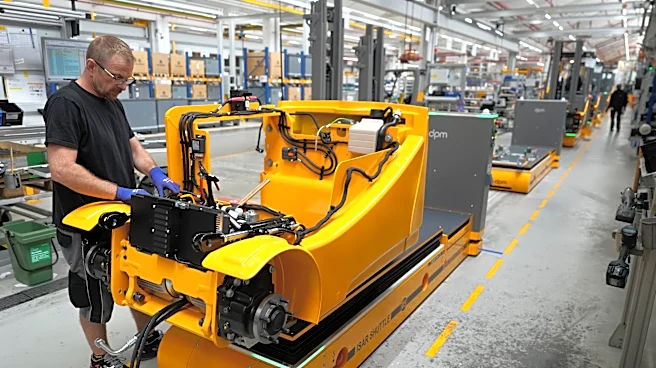
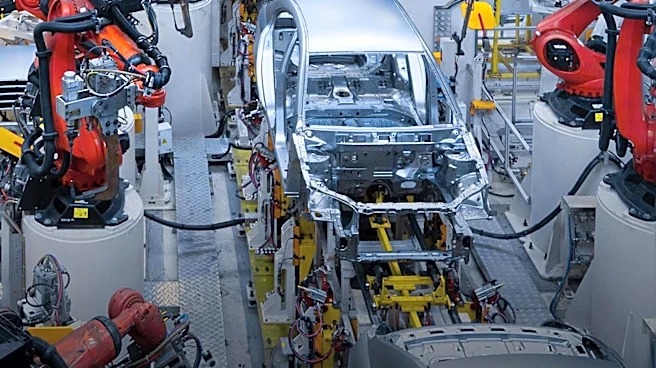
German industrial orders saw a significant increase of 2.5% in July, surpassing analyst forecasts of a 0.3% rise. This surge was primarily driven by substantial large-scale orders for transport equipment, including ships, railway rolling stock, and aircraft,
which saw a remarkable 126.4% increase in new orders within that specific manufacturing sector. However, when these large-scale orders are excluded, new orders actually declined by 1.4% compared to the previous month, indicating that underlying demand remains subdued. Domestic orders rose by 9.1%, while foreign orders experienced a 2.1% drop. The less volatile three-month comparison from May to July showed a 2.9% increase in new orders compared to the preceding three months, suggesting a positive, albeit moderate, trend.
Why It's Important?
This unexpected rise in German industrial orders provides a mixed signal for the broader European and global economies. While the headline figure suggests robust activity, the reliance on a few large transport equipment contracts indicates that the underlying industrial demand might still be weak. Germany is a key economic engine in Europe, and its industrial health has significant implications for supply chains, trade, and overall economic sentiment across the continent and beyond. The strong domestic demand component is a positive sign, potentially reflecting internal resilience, but the decline in foreign orders could signal challenges in international trade or global economic slowdowns. For U.S. businesses and policymakers, this data point offers insight into the health of a major trading partner and competitor, influencing investment decisions, trade policies, and expectations for global economic growth.
What's Next?
Economists anticipate that the German economy will recover only moderately, as the underlying trend in industrial orders continues to move sideways at a low level when large-scale orders are excluded. The already high order books in various sectors are expected to contribute to further stabilization in the manufacturing sector. Several economic institutes have raised their growth forecasts for the year, attributing this to improving exports and stronger fiscal spending, including a special €500 billion infrastructure fund and an exemption from debt rules for defense spending. Future developments will depend on the sustained impact of these fiscal measures, the trajectory of global trade, and whether underlying demand can strengthen independently of large, infrequent contracts. The performance of foreign orders will be a critical indicator for the German industrial outlook in the coming months.