






What's Happening?
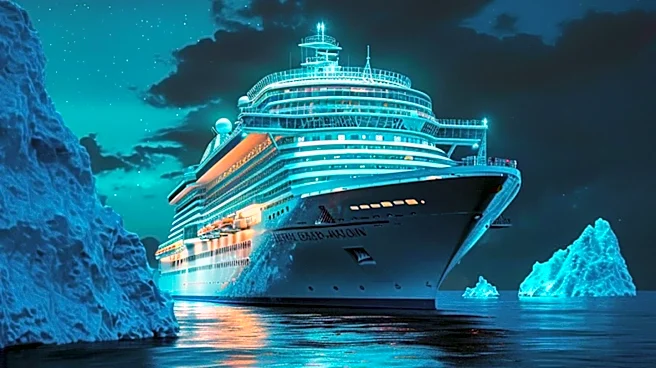
A recent study by the NGO Transport & Environment (T&E) highlights a significant tax discrepancy between cruise ships and hotels in Europe. The research reveals that a night on a cruise ship is, on average, 40% cheaper after taxes than a night in a hotel.
This is due to cruise ships being classified as a mode of transport rather than accommodation, allowing them to avoid VAT and other hospitality-specific taxes. The report argues that this classification is outdated, as modern cruise ships function more like floating hotels, with passengers often embarking and disembarking at the same location. The study calls for cruise vacations to be taxed at the same level as hotel stays to address the environmental damage caused by the cruise industry and to alleviate tensions with local communities overwhelmed by mass tourism.
Why It's Important?
The tax advantage enjoyed by cruise ships has significant implications for both the environment and local economies. Cruise ships contribute substantially to greenhouse gas emissions and other pollutants, yet these environmental costs are not reflected in the current tax system. The report estimates that emissions from cruise ships in France, Spain, and Italy could cost between 550 to 930 million euros by 2025. This discrepancy not only affects the environment but also creates an unfair competitive advantage over hotels, which are subject to higher taxes. Addressing this imbalance could lead to more sustainable tourism practices and provide local governments with additional revenue to manage the impacts of mass tourism.
What's Next?
Several European destinations are already taking steps to address the tax imbalance by introducing specific taxes for cruise passengers. For instance, Greece has implemented a passenger tax ranging from 5 to 20 euros, depending on the port and season. Other cities like Amsterdam, Barcelona, and Dubrovnik are considering similar measures to limit congestion and pollution. The T&E report suggests that a passenger tax of 15 euros per stop in France could generate significant revenue to support local economies and infrastructure. Additionally, the report recommends regulatory actions such as promoting low-carbon maritime fuels and potentially restricting the number of cruise ships to reduce their environmental impact.
Beyond the Headlines
The debate over cruise ship taxation touches on broader issues of sustainable tourism and environmental responsibility. As the number of cruise passengers in Europe is expected to rise, policymakers face the challenge of balancing economic benefits with environmental and social costs. Implementing fair taxation and regulatory measures could encourage the cruise industry to adopt more sustainable practices, ultimately benefiting both local communities and the environment. This situation also highlights the need for a reevaluation of how different sectors are taxed and regulated in light of their environmental impact.