

What's Happening?
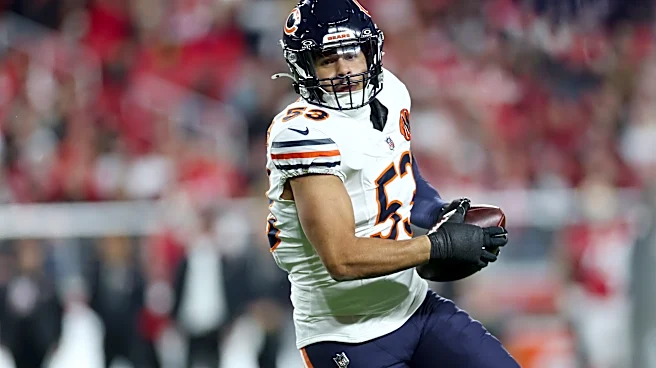
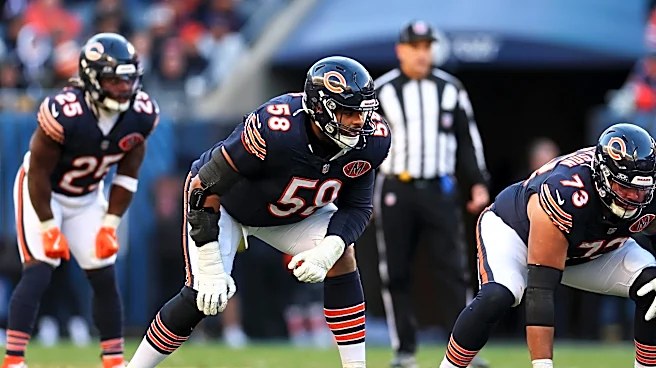
The Chicago Bears have placed linebacker T.J. Edwards on the Active/Non-Football Injury (NFI) list as the team begins its training camp. This designation is for players who sustain injuries outside of team activities, and Edwards' current condition is unrelated
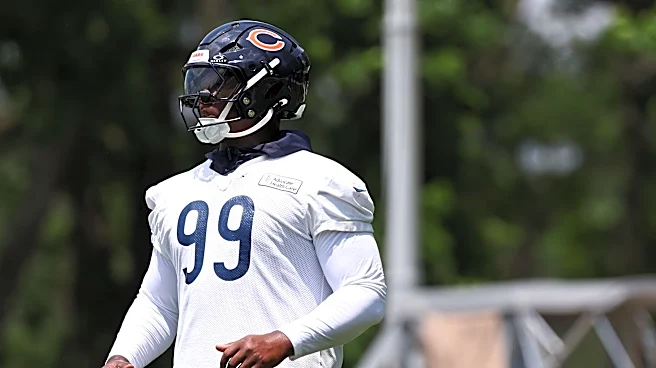
to the broken fibula he suffered during the Wildcard game. NFL Insider Ian Rapoport has reported that Edwards is dealing with a minor muscle strain, and his time on the NFI list is expected to be brief. Additionally, the Bears have placed several other players on the Active/Physically Unable to Perform (PUP) list, including rookie linebacker Keyshaun Elliott, nickleback Kyler Gordon, linebacker Noah Sewell, offensive tackle Ozzy Trapilo, and defensive lineman Shemar Turner. These players are still recovering from injuries sustained during football activities.
Why It's Important?
The placement of T.J. Edwards on the NFI list is significant as it impacts the Bears' defensive lineup during a crucial period of preparation for the upcoming season. Edwards is a key player for the Bears, and his absence, even if temporary, could affect the team's defensive strategies and performance in training camp. The additional players on the PUP list highlight the challenges the Bears face with injuries as they prepare for the season. Managing these injuries effectively will be crucial for the Bears to ensure they have a competitive roster ready for the start of the season. The team's ability to adapt and fill these gaps will be a test of their depth and resilience.
What's Next?
The Bears will continue to monitor the health and recovery of T.J. Edwards and the other players on the PUP list. As training camp progresses, the team will need to make decisions on roster adjustments and potential replacements if these players are unable to return to full participation. The coaching staff will likely focus on developing backup players to step into these roles temporarily. The team's medical staff will also play a critical role in ensuring that players recover fully and are not rushed back into action prematurely, which could risk further injury.