









What's Happening?
Teledyne FLIR Defense, a division of Teledyne Technologies Incorporated, has announced the release of three upgraded vision systems designed for military vehicles. These systems, unveiled at the Eurosatory defense and security exhibition, aim to enhance
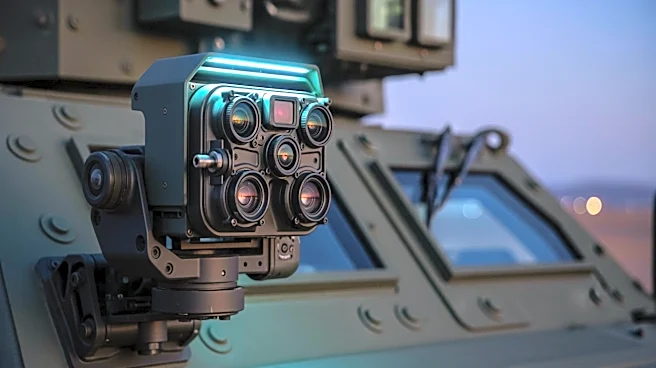
targeting, driver vision, and provide a comprehensive 360-degree field of view. The new products include the ThermoVision Situational Awareness HD (SA90-HD), ThermoVision Driver Vision HD (DV55-HD), and the MilSight LIRC III Compact Vehicle-Mounted Weapon Sight. These systems are engineered to improve object detection and identification in various terrains and conditions, offering full visibility through smoke and fog, both day and night. The compact design and easy integration of these systems allow for scalable solutions that can be tailored to meet different mission requirements, supporting tasks such as target acquisition, situational awareness, and threat detection.
Why It's Important?
The introduction of these advanced vision systems is significant for military operations as they enhance the safety and effectiveness of both manned and unmanned missions. By providing improved visibility and target detection capabilities, these systems offer a strategic advantage in complex and dynamic battlefield environments. The ability to maintain clear imagery in challenging conditions can be crucial for mission success and the safety of military personnel. Furthermore, the integration of these systems into military vehicles can lead to more efficient and effective operations, potentially reducing the risk of casualties and increasing mission success rates. This development also reflects the ongoing innovation in military technology, emphasizing the importance of advanced imaging solutions in modern warfare.
What's Next?
Teledyne FLIR Defense plans to make these systems available for customer orders, with production taking place at their facilities in Täby, Sweden. As these systems are deployed, military forces around the world may begin integrating them into their vehicle fleets, potentially leading to further advancements in military vehicle technology. The adoption of these systems could prompt other defense technology companies to develop similar or complementary technologies, fostering further innovation in the field. Additionally, military organizations may conduct evaluations and field tests to assess the performance and effectiveness of these systems in real-world scenarios.