






What's Happening?
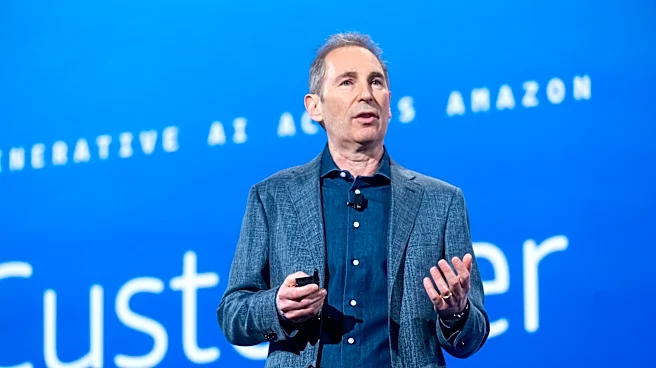
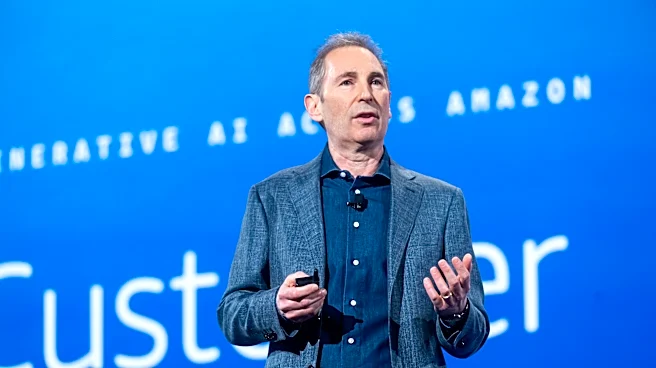
Amazon President and CEO Andy Jassy sold 20,000 shares of Amazon stock, totaling approximately $5.13 million, on November 21, 2026. This transaction was part of a Rule 10b5-1 trading plan, a pre-scheduled arrangement that allows company insiders to sell
shares without making day-to-day decisions. The sale occurred after 50,000 restricted stock units, which are shares promised as compensation, vested on the same day. Jassy's sales were executed in nine separate lots, with weighted-average prices ranging from about $251.54 to $260.03 per share. Other Amazon insiders, including CFO Brian Olsavsky and AWS CEO Matt Garman, also reported stock sales around the same time, with a total of 64,848 shares worth about $16.6 million sold by six executives. All these sales were conducted under Rule 10b5-1 plans.
Why It's Important?
The sale of Amazon stock by its top executives, including CEO Andy Jassy, is significant for investors and the market as it provides insight into insider activity. While large-scale insider sales can sometimes signal concerns about a company's future performance, the fact that these sales were conducted under Rule 10b5-1 trading plans mitigates such concerns. These pre-set plans are designed to allow insiders to sell shares over time without being accused of trading on non-public information. This transparency helps maintain investor confidence by demonstrating that the sales are part of a long-term financial strategy rather than a reaction to immediate negative developments. For Amazon, a company with a market capitalization of $2.73 trillion, these sales, particularly when tied to vested restricted stock units, are generally viewed as routine compensation management rather than a red flag.
What's Next?
The continuation of Rule 10b5-1 trading plans by Amazon executives suggests a predictable pattern for future stock sales, particularly following the vesting of restricted stock units. Investors will likely continue to monitor Form 4 filings for any deviations from these established patterns, as sales outside of a pre-set plan or not tied to newly vested stock could signal a change in executive sentiment. However, as long as sales adhere to these structured plans and align with compensation schedules, they are expected to be perceived as normal course of business. The company's stock performance, which saw a 3.47% rise on November 23 before a slight dip, will continue to be influenced by broader market trends and Amazon's operational results, rather than these pre-scheduled insider transactions.
Beyond the Headlines
The widespread use of Rule 10b5-1 plans by corporate executives, as demonstrated by Amazon's leadership, highlights a critical aspect of corporate governance and executive compensation. These plans are intended to provide a legal and ethical framework for insiders to manage their personal finances while avoiding accusations of insider trading. However, the effectiveness and potential for abuse of these plans have been subjects of ongoing debate, leading to regulatory scrutiny and calls for stricter rules. The consistent pattern of sales by Amazon's top executives, tied to the vesting of restricted stock units, underscores how a significant portion of executive compensation is structured through equity, aligning their financial interests with the company's long-term performance. This practice also provides executives with liquidity for personal financial planning, while the pre-set nature of the sales aims to ensure fairness and transparency in the market.