






What's Happening?
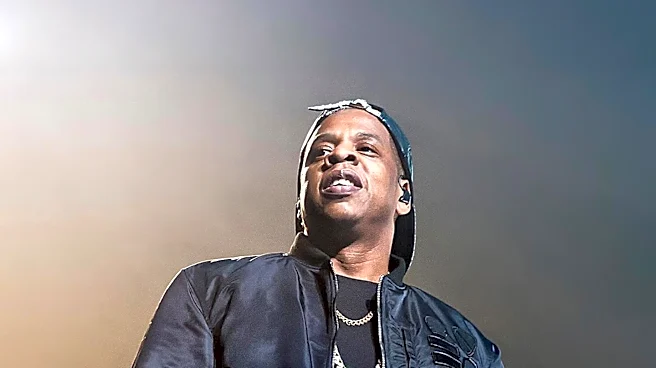
Jay-Z has publicly addressed Kanye West's apparent resentment regarding his collaboration with the band Coldplay. During the seventh episode of his docuseries 'JAŸ-Z in 8,' the hip-hop icon discussed West's reaction, which was notably expressed in West's 2007
track 'Big Brother.' In the song, West rapped about telling Jay-Z he had recorded with Coldplay, only to find out Jay-Z subsequently collaborated with the group. Jay-Z clarified that his work with Coldplay stemmed from his personal friendship with frontman Chris Martin, whom he had introduced to West. He described West's reaction as rooted in a sense of 'entitlement,' arguing that artists should not expect exclusive access to collaborators and that creative partnerships should not be treated as possessions.
Why It's Important?
This revelation from Jay-Z sheds light on the intricate dynamics and unspoken rules within the music industry, particularly concerning collaborations and artistic relationships. It highlights the tension between personal friendships and professional boundaries, and the potential for misunderstandings or perceived betrayals among artists. Jay-Z's stance on artistic freedom—that 'we don’t own people' and musicians should be free to work with multiple artists—is a significant statement that challenges possessive attitudes towards creative partnerships. This perspective can influence how emerging artists navigate collaborations and how established artists manage their professional networks, emphasizing independence and mutual respect over exclusivity. The discussion also provides a rare glimpse into the personal reflections of two of hip-hop's most influential figures.
What's Next?
The discussion from Jay-Z's docuseries is likely to reignite conversations among fans and industry insiders about the history of the relationship between Jay-Z and Kanye West, which has been complex and often public. While Jay-Z has previously distanced himself from West due to controversial comments, his current remarks offer a nuanced perspective on a specific past grievance. This could lead to further analysis of their collaborative history and individual artistic philosophies. The emphasis on artistic freedom and the rejection of 'ownership' in collaborations may also set a precedent or encourage a more open approach to creative partnerships within the music industry, potentially fostering a more collaborative environment free from perceived territorialism.
Beyond the Headlines
Beyond the immediate context of the two artists, Jay-Z's comments touch upon broader themes of ownership, loyalty, and creative autonomy in any collaborative field. His assertion that 'we don’t own people' transcends the music industry, resonating with ethical considerations in various professional and personal relationships. It challenges the notion that prior association grants exclusive rights or expectations, advocating for individual agency and the right to pursue opportunities independently. This philosophical stance could encourage a re-evaluation of how creative and professional relationships are structured, promoting a healthier environment where individuals feel empowered to collaborate widely without fear of perceived disloyalty or 'betrayal.'