







What's Happening?
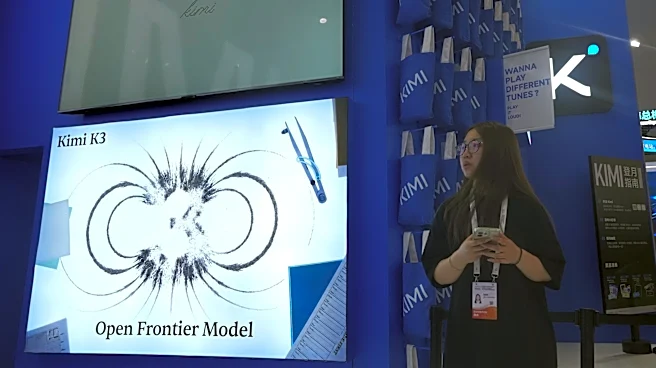
Moonshot, a Chinese artificial intelligence startup, has announced the launch of Kimi for financial services, integrating its Kimi AI models with leading financial industry data providers. This development allows financial giants, including investment
banks, funds, and venture capital firms, to utilize Kimi's AI tools for analysis and reports. Companies such as investment bank CICC and venture capital firm Hong Shan (formerly Sequoia China) are reportedly using Kimi. The AI model can access information from industry data partners like S&P Global Market Intelligence, Crunchbase, Wind, local financial news leaders, and business database Tianyancha. Furthermore, Kimi can directly access the U.S. Securities and Exchange Commission's EDGAR system for public companies' financial filings, the International Monetary Fund (IMF), the World Bank, and the U.S. Federal Reserve Economic Data site (FRED). Subscriptions for Kimi range from 49 yuan ($7.31) to 699 yuan ($104.23) per month, with different data access tiers based on the subscription level.
Why It's Important?
This move by Moonshot signifies a growing trend of AI companies pursuing real-world, commercial applications, particularly within the financial sector. The integration of Kimi with major U.S. financial data sources, such as the SEC's EDGAR system and the Federal Reserve Economic Data site, could streamline financial analysis and reporting for its users. For U.S. financial institutions and markets, the increased use of AI tools, even from foreign providers, could lead to more efficient data processing and potentially faster insights, though it also raises questions about data security and reliability. Samuel Fischer, Beijing branch manager at Deutsche Bank, highlighted the importance of AI companies understanding real financial workflows and delivering reliability and data security. The competition from Chinese AI models like Kimi, which competes with leading U.S. companies, underscores the global race in AI development and its application across critical industries.
What's Next?
Moonshot's expansion into financial services suggests a continued push for commercial AI applications. The company has reportedly filed confidentially for a Hong Kong IPO, indicating potential future growth and increased investment in its AI capabilities. As Kimi gains traction, it will likely face scrutiny regarding data security, accuracy, and compliance with financial regulations, especially given its access to sensitive U.S. financial data. The competitive landscape in AI for financial services is expected to intensify, with both U.S. and international companies vying for market share. Future developments may include further enhancements to Kimi's analytical capabilities, broader adoption by financial institutions, and potential regulatory responses to the use of AI in handling vast amounts of financial data.
Beyond the Headlines
The integration of a Chinese AI model with critical U.S. financial data systems raises deeper implications concerning data sovereignty, cybersecurity, and the ethical use of artificial intelligence in sensitive sectors. While the immediate benefit is enhanced analytical efficiency, the long-term implications could involve questions about the potential for data manipulation, intellectual property theft, or even systemic risks if AI models are not rigorously vetted and regulated. The reliance on foreign AI technology for accessing and processing U.S. financial filings and economic data could also spark discussions about national security and economic independence. This development highlights the increasing interconnectedness of global financial markets and the pervasive influence of AI, necessitating a careful balance between innovation and robust oversight to protect critical financial infrastructure and data integrity.