




What's Happening?
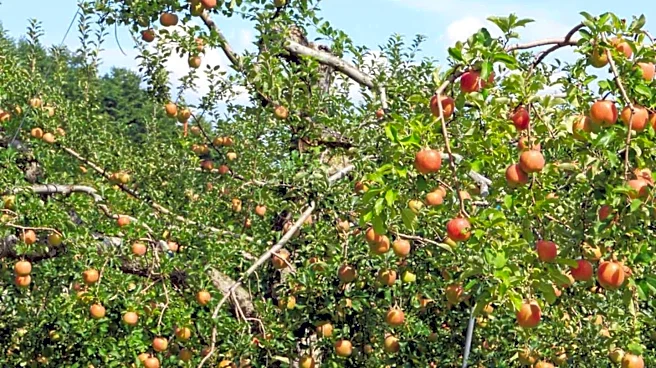
Fruit Growers News highlights regenerative orchard management as a practical approach for growers, emphasizing its economic viability and the critical importance of soil health. The publication notes that while 'regenerative' has become a buzzword alongside
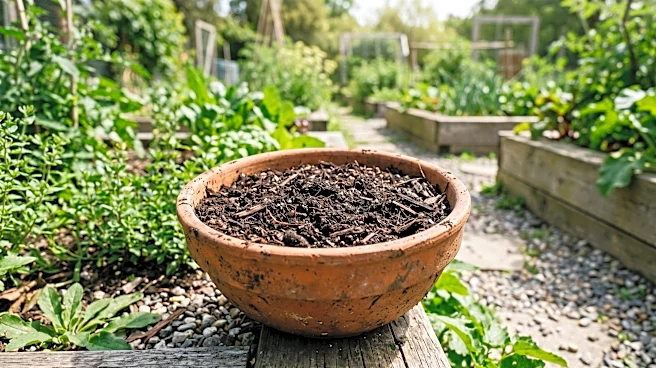
'organic' and 'sustainable,' its practical benefits for farms are significant. The article stresses that for regenerative agriculture to be economically competitive, it must offer financial advantages through higher crop value, improved yields or quality, reduced input costs, or a combination thereof, rather than relying solely on niche marketing. Green's Fruit Farm, as cited in the article, defines regenerative agriculture as systems and practices designed to improve the health of the entire agroecosystem, aiming for measurable improvement beyond just maintaining existing conditions. Soil health is presented as central to this approach, supporting plant health and potentially benefiting consumers. The article also discusses integrating practices like adding carbon and nutrients through mulches, introducing beneficial biology via soil amendments, and supporting plant health through foliar nutrition.
Why It's Important?
This focus on the economic viability of regenerative orchard management is crucial for the U.S. agricultural sector. It addresses a key barrier to adoption: the perception that sustainable practices are not financially competitive. By demonstrating how regenerative methods can lead to higher crop value, better yields, reduced costs, and improved quality, Fruit Growers News provides a compelling case for growers to transition. This shift could lead to more resilient farming operations, less reliance on synthetic inputs, and healthier soil, which is a vital natural resource. For consumers, it could mean access to higher-quality produce grown in an environmentally responsible manner. Furthermore, widespread adoption of these practices could contribute to broader environmental goals, such as carbon sequestration and biodiversity enhancement, impacting national climate and conservation efforts. It also signals a potential evolution in agricultural policy, possibly leading to incentives for regenerative farming.
What's Next?
The continued emphasis on practical and economically viable regenerative agriculture suggests that more growers may begin to experiment with or fully adopt these practices. This could lead to increased demand for research and development in regenerative techniques tailored for specific crops and regions within the U.S. Agricultural extension services and industry associations are likely to play a larger role in educating farmers and sharing best practices. We might also see the development of new market channels or certifications that specifically highlight regeneratively grown produce, providing a premium for farmers who invest in these methods. Policy discussions could emerge around supporting farmers in this transition, perhaps through grants, subsidies, or technical assistance programs aimed at improving soil health and reducing environmental impact. The success of early adopters will be critical in demonstrating the long-term benefits and encouraging broader industry change.
Beyond the Headlines
The discussion around regenerative orchard management touches upon deeper implications for the future of food production and land stewardship in the U.S. It represents a paradigm shift from an industrial agricultural model focused on maximizing output through external inputs to one that prioritizes ecological health and system resilience. This shift has ethical dimensions, as it redefines the farmer's role from mere producer to ecosystem manager, with a responsibility to enhance natural capital. Legally, it could influence regulations concerning land use, water quality, and pesticide application, potentially leading to more stringent environmental protections or incentives for ecological farming. Culturally, it could foster a renewed connection between consumers and their food sources, promoting a greater appreciation for the ecological processes behind food production. This movement could also inspire innovation in agricultural technology, focusing on tools that support soil health monitoring, precision nutrient management, and biological pest control, ultimately reshaping the agricultural landscape for generations.