


What's Happening?
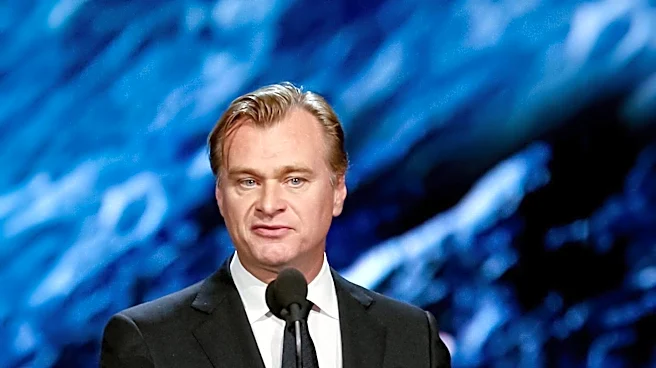
Director Christopher Nolan has shared his perspective on watching his film, 'The Odyssey,' at home, even as the movie returns to IMAX 70mm. Nolan acknowledges that IMAX offers the optimal viewing experience, but he also highlights the unique advantages
of home viewing. He told Polygon that watching a film at home allows for a different kind of concentration, enabling viewers to pause, take breaks, and return to the movie. This control over the timeline, according to Nolan, allows audiences to focus on specific details, particularly the performances of the ensemble cast. He encourages multiple viewings to fully appreciate the subtleties and nuances brought by actors such as Robert Pattinson, Tom Holland, Matt Damon, Charlize Theron, Anne Hathaway, and Jon Bernthal. Nolan also stated his stance against director's cuts, emphasizing his commitment to the theatrical release version of his films and confirming that deleted scenes will not be released.
Why It's Important?
Nolan's comments offer insight into the evolving landscape of film consumption and the director's relationship with different viewing platforms. His endorsement of home viewing, despite his known preference for theatrical presentations, acknowledges the significant role streaming and home entertainment play in how audiences engage with cinema. This perspective is important for the film industry as it navigates the balance between cinematic spectacle and the convenience of home viewing. For filmmakers, it suggests a recognition that a film's impact can be experienced in varied ways, potentially influencing how movies are crafted for both large screens and smaller, more intimate settings. For audiences, it validates their viewing choices and encourages a deeper, more analytical engagement with films, particularly those with complex narratives and performances like 'The Odyssey,' which has grossed over $1.8 billion globally, making it the highest-grossing R-rated movie ever.
What's Next?
With 'The Odyssey' returning to IMAX 70mm in December, audiences will have another opportunity to experience the film in its intended format. Nolan's remarks might encourage viewers who have already seen the film in theaters to re-watch it at home, focusing on the detailed performances he highlighted. Conversely, those who have only seen it at home might be prompted to seek out the IMAX re-release for a different, more immersive experience. The ongoing discussion about optimal viewing formats, fueled by prominent directors like Nolan, will likely continue to shape industry strategies regarding theatrical windows, home release schedules, and technological advancements in both cinema and home entertainment systems. This could also influence how studios market films, emphasizing different aspects for theatrical versus home viewing campaigns.
Beyond the Headlines
Nolan's firm stance against director's cuts touches upon a broader debate within filmmaking about artistic control and the definitive version of a work. His belief in standing by the film that goes out reflects a philosophy of meticulous pre-production and editing, where the theatrical release is considered the complete artistic statement. This contrasts with other directors who embrace director's cuts as a way to present alternative visions or restore excised material. This philosophical difference highlights varying approaches to the creative process and the finality of a film. Furthermore, his emphasis on the 'different kind of concentration' at home suggests a shift in how audiences consume art—from a collective, immersive experience in a cinema to a more personal, analytical engagement at home, potentially fostering a new kind of film literacy focused on detail and repeated viewing.