







What's Happening?
In gardens across the U.S., predatory insects are proving to be valuable allies in controlling harmful bug populations. According to Sharon Yiesla, a plant knowledge specialist at The Morton Arboretum, the majority of insects found in gardens are beneficial
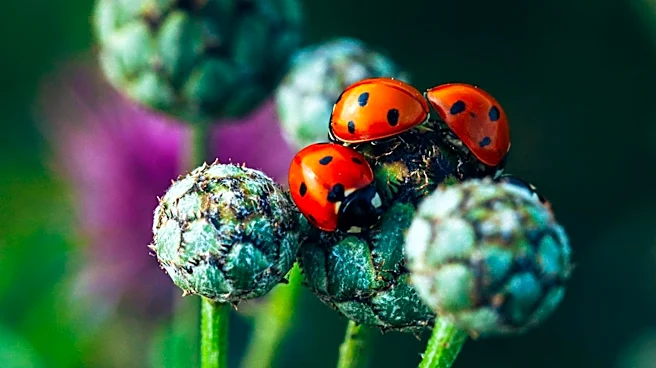
to plants. These predatory insects, such as the mealybug destroyer and various species of ladybugs, help manage pests like mealybugs and aphids by preying on them. The mealybug destroyer, for instance, is a type of ladybug larva that feeds on mealybugs and other insects throughout its life cycle. Adult ladybugs are known for their ability to consume aphids and other pests. The article emphasizes the importance of identifying insect problems accurately before using insecticides, as these chemicals can harm beneficial insects more than the pests they are intended to control.
Why It's Important?
The role of predatory insects in pest control is significant for maintaining healthy gardens and reducing the need for chemical insecticides. By allowing these natural predators to thrive, gardeners can minimize the environmental impact of pesticides, which often kill beneficial insects along with harmful ones. This approach supports biodiversity and promotes a more sustainable gardening practice. Additionally, relying on natural pest control methods can lead to healthier plants and ecosystems, as it reduces the chemical load on the environment. Gardeners and agricultural stakeholders stand to benefit from reduced costs associated with chemical treatments and improved plant health.
What's Next?
Gardeners are encouraged to seek expert advice from institutions like The Morton Arboretum's Plant Clinic to accurately identify pest problems and receive recommendations on how to manage them. This proactive approach can help preserve beneficial insect populations and ensure effective pest control. As awareness of the benefits of predatory insects grows, it is likely that more gardeners will adopt integrated pest management strategies that prioritize natural solutions over chemical interventions.
Beyond the Headlines
The increasing recognition of predatory insects' role in pest control highlights a broader shift towards sustainable and environmentally friendly gardening practices. This trend reflects a growing awareness of the ecological impacts of traditional pest control methods and a desire to protect beneficial species. As more people embrace these practices, there could be a cultural shift towards valuing and preserving natural ecosystems within urban and suburban environments.